What is a karyotype?.
Difficulty getting pregnant or recurrent miscarriages can be a sign that at least one person in a couple trying to have a baby is a carrier of a genetic disease. Statistics show that among people with reproductive problems, genetic defects occur three times more often than in those who succeed in growing their family. That is why, when trying to have a baby for a long time, one of the basic tests ordered by a specialist is a karyotype test.
Difficulty getting pregnant or recurrent miscarriages can be a sign that at least one person in a couple trying to have a baby is a carrier of a genetic disease. Statistics show that among people with reproductive problems, genetic defects occur three times more often than in those who succeed in growing their family. That is why, when trying to have a baby for a long time, one of the basic tests ordered by a specialist is a karyotype test.
What is a karyotype?
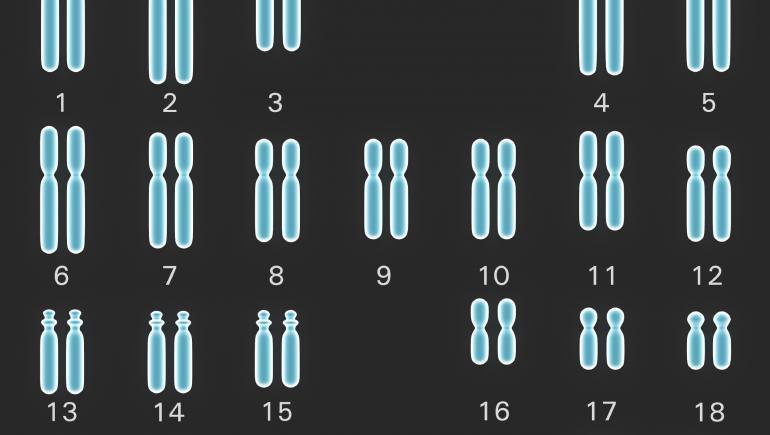
Each of the cells of the human body, with the exception of the sex cells, contains a karyotype, or set of chromosomes, specific to our species. There are 46 of these: 22 pairs of so-called autosomes (the same chromosomes in men and women) and one pair of sex chromosomes (XY in men, XX in women).
Why is the karyotype tested?
Karyotype testing detects abnormalities in the number and structure of chromosomes. In the diagnosis of infertility, a karyotype test is performed primarily to determine whether difficulties in getting pregnant or miscarriages are due to a chromosome defect in the woman or her partner. If a karyotype abnormality is found in either partner, the doctor will always refer them to a genetic clinic. There, on the basis of a specific test result, the geneticist estimates the chances of a pregnancy and the birth of a healthy baby. He or she also recommends a course of further diagnostics during a possible IVF procedure or recommends prenatal testing.
The number of defects that are associated with the possibility of passing on a specific genetic defect to a child increases with age. For this reason, women over the age of 38 participating in IVF programmes are advised to consider preimplantation diagnosis (PGS) - the examination of embryos before they are implanted in the uterus.
Chances of having a healthy child
The likelihood of fertility problems, miscarriages or birth defects in children depends on many factors, including:
-
the age of the mother (the older she is, the older her cells are, making the risk of defects higher);
-
the translocation point, i.e. the displacement of a chromosome fragment;
-
in which pairs of chromosomes the defects are present.
It is important to know that not all karyotype disorders rule out the chances of having healthy offspring. However, the risk should not be underestimated and the test should be carried out. All the more so because it is very simple - it is performed on the basis of a blood sample.
You can find out about other genetic tests used in the diagnosis of infertility here.
The medical information presented should be considered as general guidelines and does not replace the individual judgement of the doctor regarding the medical management of each patient. The doctor, after a thorough examination of the patient's condition, determines the extent and frequency of diagnostic tests and/or therapeutic procedures, taking into account specific medical indications. All medical decisions are made in full consultation with the patient.
Author of the article

Invimed editorial team - we serve patients by solving their fertility problems. We use world medical knowledge, state-of-the-art technology and treatment methods. We are here to make dreams of parenthood come true. The smiles on the faces of happy parents give meaning to our work.
See all articles →