NutriGen test

What is the NutriGen test?
NutriGen® is a professional, one-time genetic test that analyses more than 100 genetic predispositions related to metabolism, nutrition, food intolerances and the effectiveness of diets and physical activity. The test provides personalised information to help tailor diet and lifestyle to the patient's individual genetic profile.
Why take the NutriGen test?
Performing the NutriGen test:
-
allows you to optimise your diet based on your genes,
-
supports the weight loss process,
-
helps to avoid diet-related diseases (e.g. type 2 diabetes, obesity),
-
indicates the risk of food intolerances (e.g. lactose, gluten),
-
enables a more effective physical activity plan to be selected,
-
provides information on individual vitamin and mineral needs,
-
It is performed only once in a lifetime, because DNA does not change.
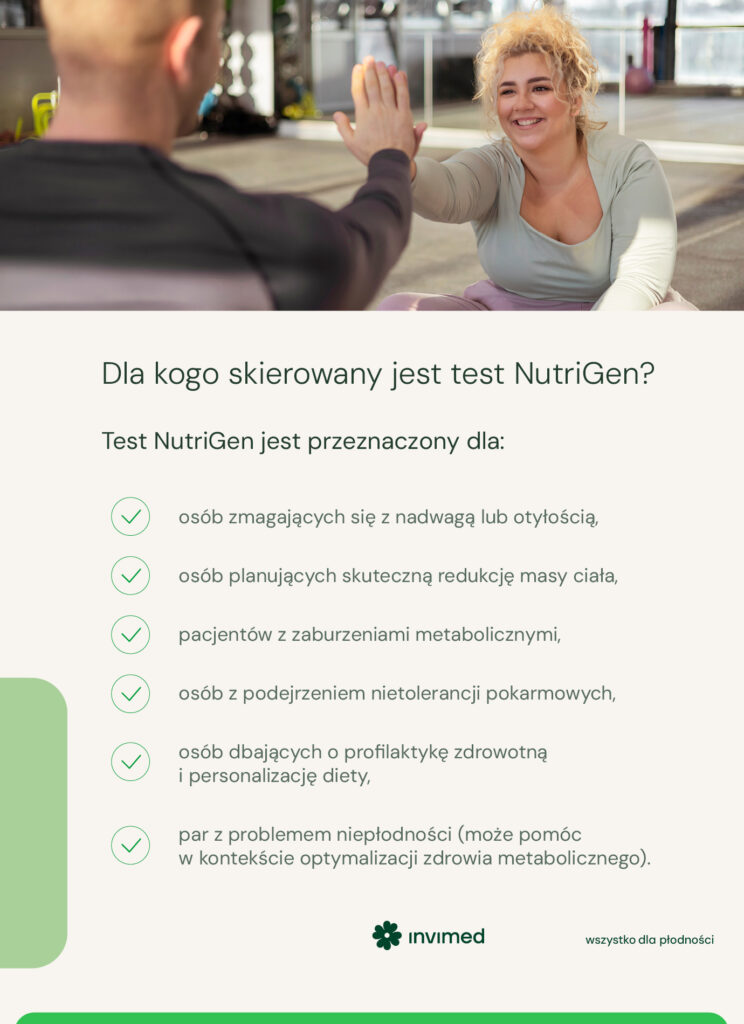
Who is the NutriGen test aimed at?
The NutriGen test is a tool to support individuals in the fight against overweight, obesity (including abdominal obesity) and metabolic disorders. Analysis of genetic predisposition enables more precise weight loss planning, better tailoring of dietary recommendations and identification of potential food intolerances. The test may be of particular value in the context of the fight against hormonal obesity, where a properly selected diet, plays a significant role in improving metabolism and overall health.
It is also worth highlighting the importance of NutriGen in terms of trying to get pregnant. The results obtained could form the basis for the development of a personalised fertility dietfor both women and men trying to have a baby.
A well-balanced menu can support natural reproductive processes and increase the chances of conception, making the test a valuable tool to support modern approaches to diet therapy and infertility treatment.
How does the testing for the NutriGen test take place?
NutriGen test procedure:
-
1. During the visit, the dietician takes a painless swab from the inside of the cheek
-
2. the sample goes to the laboratory.
-
3 Results are available after 4-5 weeks.

How do I prepare for the NutriGen test?
Recommendations:
-
Avoid eating and drinking (especially caffeine, alcohol) 30 minutes before the swab collection.
-
Do not brush your teeth immediately before the examination.
-
Make sure your mouth is clean (no leftover food or chewing gum).
What does the NutriGen test detect?
The NutriGen test analyses, among other things:
-
predisposition to overweight, obesity, yoyo effect
-
reactions to dietary components (fats, carbohydrates, proteins)
-
food intolerances (lactose, gluten, fructose)
-
susceptibility to diabetes, insulin resistance, elevated cholesterol
-
effectiveness of different types of diets
-
vitamin and mineral requirements
-
hormonal and inflammatory profile
-
effectiveness of physical activity in reducing body fat
What is the price of the NutriGen test at Invimed Warsaw Praga?
The NutriGen test costs £2,300 (price includes post-test consultation).

As part of MediClub:
10% discount on NutriGen test (price includes test and consultation discussing results)
Available only at the clinic Invimed Warsaw Prague until 31.12.2025
What is found in the NutriGen test results?
-
A) Analysis of genetic predisposition
- more than 100 genetic traits affecting metabolism, nutrition and lifestyle,
- among others, the genetic risk of obesity, insulin resistance, type 2 diabetes, food intolerances and lipid disorders. -
B) Dietary recommendations
- a personalised list of foods: divided into those that are recommended, neutral and not recommended for your genetic profile,
- guidance on the best type of diet (e.g. low-fat, low-carbohydrate). -
C) Information on physical activity
- analysis of the effectiveness of exercise in terms of fat reduction and impact on cholesterol levels.
-
D) Vitamin and mineral needs
- assessment of the genetic risk of vitamin (A, B6, B9, B12, C, D, E) and mineral (calcium, iron, magnesium, selenium, sodium) deficiencies.
-
E) Metabolic profile
- information on fat, carbohydrate, glucose and lipid metabolism,
- basal metabolism (BMR) and the ability to reduce weight in response to diet. -
F) Indications of intolerance
- assessing the risk of intolerance: lactose, gluten, fructose, caffeine, alcohol.
-
G) Final report
- all results are compiled in the form of a clear report, available digitally (on a memory stick) - ready for discussion with a dietician or doctor.

The medical information presented should be considered as general guidelines and does not replace the individual judgement of the doctor regarding the medical management of each patient. The doctor, after a thorough examination of the patient's condition, determines the extent and frequency of diagnostic tests and/or therapeutic procedures, taking into account specific medical indications. All medical decisions are made in full consultation with the patient.
Author of the article

Invimed editorial team - we serve patients by solving their fertility problems. We use world medical knowledge, state-of-the-art technology and treatment methods. We are here to make dreams of parenthood come true. The smiles on the faces of happy parents give meaning to our work.
See all articles →