The spermatic cord under a magnifying glass.
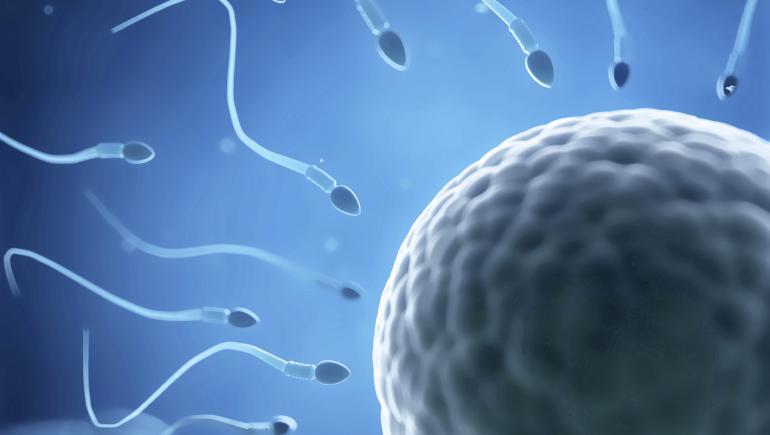
What does sperm look like with a normal structure?
The function of the male gamete is to transport the father's genetic material and fuse with the egg cell. The process by which sperm is formed is called spermatogenesis. During spermatogenesis, the developing sperm cell undergoes a number of changes. One of these is a gradual reduction in the size of the cell nucleus and a significant condensation of its genetic material.
The phenomena occurring in spermatogenesis give rise to a cell with a unique structure. A mature, properly structured human spermatozoon is about 60 µm long. Its head is flattened and pointed, measuring 4.5 µm long, 3 µm wide and 1 µm thick. The tail of the spermatic cord is divided into a neck, a middle part, a main part and a terminal part. The middle part is approximately 7 µm long and contains mitochondria arranged spirally around the thick fibres. These mitochondria provide the energy for the movement of the tail and are thus the cause of sperm motility. The main fragment is approximately 40 µm long. The terminal fragment measures approximately 5 µm in the mature spermatozoon.
The total number of sperm in the ejaculate should be ≥39 million. The exact range may vary, but usually a normal or healthy sperm morphology result is above 4 per cent.
Poor sperm morphology - what does it indicate?
Abnormalities in the size and shape of spermatozoa may involve the vita, head or insertion. In some cases, the mutations or changes do not affect their overall functionality. In other situations, the sperm may not be able to move properly or fast enough to reach, pierce or enter the cell membrane of the egg cell.
Doctors assess sperm morphology during a general semen analysis (seminogram). Laboratory technicians usually carry out a sperm morphology test by placing a small portion of semen on a glass slide, allowing it to air-dry and then staining it with a dye that makes it easier to view individual sperm under a microscope.
An abnormal or low sperm morphology result alone does not always mean infertility. Often, however, a sperm count of less than 4 per cent of normal sperm is an indication for in vitro fertilisation or insemination. A high number of abnormally formed sperm in a sample is a sign of a condition called teratozoospermia.
Sperm abnormalities - treatment
It is important to remember that sperm of abnormal size or shape usually still contain healthy genetic material. Many fertile men have a high percentage of abnormal sperm.
Occasionally, a seminogram will indicate a lack of sperm with a normal structure. In this situation, the doctor in charge may recommend repeating the test after some time or ordering further diagnostics and treatment to improve sperm quality. Lifestyle plays a major role in the treatment of abnormal sperm structure. For this reason, it is recommended to stop using stimulants. You also need to be particularly careful about overheating the testicles. In addition, dietary changes are helpful (foods rich in selenium, zinc, L-carnitine, as well as vitamins and omega-3 fatty acids). Therapy may also be based on the treatment of pathological causes of teratozoospermia.
Sperm selection prior to in vitro fertilisation
The selection of the best quality sperm is increasingly used in infertility treatment. This is done to increase the chance of fertilisation. Sperm selection is done on the basis of their normal structure. Criteria for the characteristics of sperm morphology were defined in 2010. World Health Organisation (WHO). Sperm are tested both for natural fertilisation, inseminationas well as in vitro fertilisation. This method increases the chances of the procedure being successful.
The characteristics of the sperm's structure play an important role in the in vitro ICSI technique, which involves the injection of a sperm into an egg. However, in certain cases of male infertility, using normal technical equipment to ICSI, selection of the correct sperm by the embryologist is not possible because the quality of the sperm is very low.
For this reason, the researchers proposed MSOME (Motile sperm organelle morphology examination). This is a way of examining sperm that helps to select sperm with the correct structure and then use them for in vitro fertilisation using the IMSI- 6600 (Iintra-cytoplasmic morphologically - selected sperm injection) technique. This uses a microscope that magnifies the sperm as much as 6,600 times. This allows the selection of viable motile sperm without the need for special methods that can damage them. The procedure IMSI is used in those patients whose sperm contains less than 4 per cent normal sperm. This can reduce the rate of spontaneous miscarriages and increase the pregnancy rate from 30 to more than 60 per cent, compared with the use of traditional ICSI in the same patients.
The medical information presented should be considered as general guidelines and does not replace the individual judgement of the doctor regarding the medical management of each patient. The doctor, after a thorough examination of the patient's condition, determines the extent and frequency of diagnostic tests and/or therapeutic procedures, taking into account specific medical indications. All medical decisions are made in full consultation with the patient.
Author of the article

Invimed editorial team - we serve patients by solving their fertility problems. We use world medical knowledge, state-of-the-art technology and treatment methods. We are here to make dreams of parenthood come true. The smiles on the faces of happy parents give meaning to our work.
See all articles →