How do we tell a child that we are not their genetic parents?.
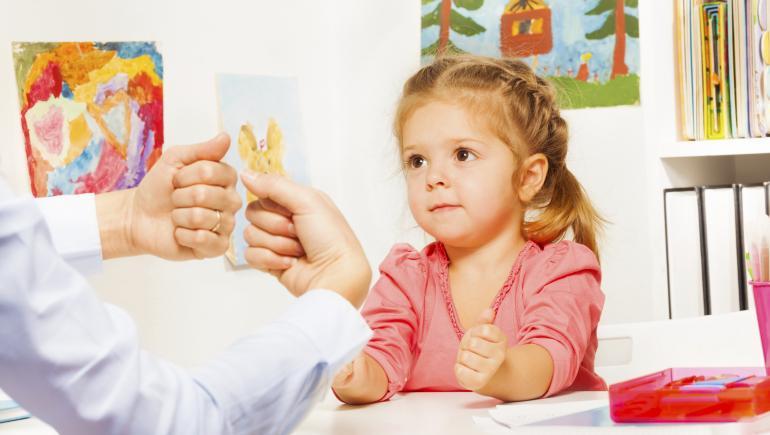
How to say it? Difficult conversations with children
It is worth starting from the fact that informing the child about the circumstances of his or her conception is not a one-off activity, but an ongoing and changing process. As the child grows up, more information and details are added. We cannot simply sit a child down at the table and inform them that we are not their genetic parents and they were born with the help of strangers they will most likely never know.
But actually, why should I say that?
We are entitled to wonder whether our child really needs such information and whether it would not be better if we kept this truth to ourselves. Here are some important reasons why it is worth doing so, however:
- Honesty is the basis of any relationship based on trust;
- Informing a child about his or her roots is tantamount to showing respect to the child and respecting his or her right to know who they are;
- The information provided by the parents protects the child from the shock he or she may experience if the truth is accidentally revealed, for example, by someone close to him or her;
- Giving the information to the child allows him or her to control the flow of information in the future and therefore gives him or her the chance to decide for themselves who they want to tell, how much and when;
- The information given to the child about the manner of his or her conception does not in any way change the child's relationship with his or her parents, cause the child to stop loving them or destroy his or her relationship with his or her parents;
- Telling the truth allows you to feel free to broach the subject of your appearance with your child, especially if they are not similar to their parents and siblings. This allows the child to avoid speculation about the reasons for the differences (Am I adopted? Or did mum have an affair?);
- Being open about how the child was conceived greatly facilitates contacts with doctors, who can be informed about the child's genetic history from the beginning and take it into account. If the specialist knows that the child is not genetically related to the mother, he does not suggest an ophthalmology consultation even though the mother wears glasses. At the same time, he or she may be more attentive and order more tests if the child is ill, because he or she realises that half of the child's inherited genes come from an unknown donor.
When is the best time to say it?
Ideally, this is when the child himself starts asking questions about his birth. This usually happens before the age of four. It may seem too early, but remember that the extent and manner in which information is communicated must always be adapted to the age and therefore to the pace of development and the child's capacity to understand reality. It is therefore advisable to wait for the child's questions, which are a sign of his or her readiness to address the subject. If, however, the child does not ask such questions, it would be a good idea to start the conversation yourself, preferably not later than around the fifth birthday. You can start with a very simple message about the love that was the basis for bringing the child into the world: we wanted you to be with us so much that when it turned out that we could not give birth to you ourselves, we asked for help from a very nice lady/ gentleman who made it easier for us. As a result we are happy because we can be together and love you very much.
Over time, the story can be enriched with more information, e.g.: we all went together to the doctor who helped us get pregnant. The doctor took an egg from a nice lady, combined it with my dad's seed and put it in my belly (uterus), where it developed over nine months to become you. In this way, the subsequent information given to the child about donation is not surprising or shocking to him. For the child, donation becomes part of his or her personal history, it is simply one of the ways in which children come to families, the same as IVF treatment or adoption. The young person recognises this method as normal, and the moment his maturity allows it, we will be able to share the full knowledge of this with him. It will not pose any problem for him, as he will already be introduced to the subject and confident that his parents have always been honest with him.
This also avoids the very difficult for everyone 'serious conversation' that would eventually have to take place, which would indeed be an unpleasant surprise for the child provoking questions. Why didn't they tell him or her earlier? What does this information actually mean and what does it change in his life so far? Such conversations divide life, as it were, into two parts: one that took place when "I didn't know yet" and one that happens "after THIS conversation". This is why it is so difficult to decide when and how to have it, which often results in postponing giving the information to the child until a "better moment" that may never come.
However, if you have not yet decided to tell your child how to conceive, remember that it is never too late to do so. Just think about how best to do it. The conversation in this situation will be a one-off event rather than the process described above, but it is certainly worth having. You may need support, so it is worth consulting a psychologist at the InviMed infertility clinic and using the materials available on the 'Say and Talk' campaign website, including the brochures of the same title that can be found there. These materials have been developed precisely for parents of children of different ages who have been born with the help of donors/donors and are intended to help them talk to their children about how they came into the world.
How and what to tell the child?
We have already partly answered this question, but it is worth adding that there is no need to be afraid of these conversations due to the fact that they also indirectly involve sexual topics. As you may have noticed, the ways we propose to convey information to children at the beginning do not at all include details that could be associated with sex, because the language of the message has to be adapted to the cognitive capacity of the young child and the range of his or her interests. Children are not interested in technical details. It is important to them that they were conceived out of their parents' love and great desire, and this is the truth that we want to convey to them in the first instance.
Only then do we enrich our story with further, more detailed elements, but these only appear when the child developmentally also needs general sex education. Such education should in any case be carried out by the parents and the conception with the help of a donor/donor can only be an additional motivating factor for them to pass on the necessary knowledge to the child. Good educational books and films can be used here (a list of valuable items can be found, for example, on the website of the Ponton group of sex educators).
How to communicate knowledge about in vitro fertilisation?
Increasing fertility problems are causing people to choose methods of reproduction other than natural conception. Thanks to advances in science, it is not uncommon to conceive using assisted reproductive techniques such as in vitro fertilisation. Parents are usually advised to explain to their children how they were conceived or brought into the family. Unfortunately, this is still sometimes kept a secret, often through a sense of shame. However, it is worth informing the child themselves about other methods of having a newborn baby in the family. They will then be fully aware that this does not take away their value and will be more resilient when they encounter unfavourable comments about IVF in the media or in their surroundings.
As well as explaining how children are produced, parents can talk about the different types of family structures today. It is worth informing them that children can also come from adoption, from a surrogate mother or from fertilisation outside the mother's belly. With this awareness, the child will also be more open and tolerant in the future. Information can be given by introducing the child to books on IVF. They do not need to know about the details at a very young age, but should learn them gradually.
Children understand more than we think. Don't be afraid to explain from an early age what egg or sperm donation is all about, so that the child is able to understand why their parents needed help to conceive a child. Also, the materials available to explain in vitro fertilisation or egg donation have progressed a lot. For the child anyway, the most important thing is your love. Your thinking and attitude is also important. Think of IVF as something special - because you have gone to some trouble, your journey and your child will always be special.
How will the child react?
Concern for the child's reaction is natural when communicating such a complex truth, but also often completely unnecessary. If the child is less than 5-6 years old and feels our love and care, he or she will most likely accept this information without strong emotions. Honesty and a sense of security are a base for him, which is not likely to be disturbed by the information that our eggs were not healthy and it was not possible to conceive a child thanks to them, so we had to use the help of another woman. The child may not be particularly interested in this news or may ask a simple question about it and go back to playing.
If the child is older, between 6 and 8 years old, you can take this opportunity to talk to them about the differences between families and the ways in which children come into them, sometimes with the help of outsiders, as in the case of adoption or infertility. In doing so, it is worth emphasising the emotional bonds and their importance, which can fully compensate all family members for the lack of blood ties. The child may not immediately understand everything we want to convey - it is then worth looking for the right form, but also remembering at all times that our story must not lack love. The story we pass on to the child is first and foremost a story about our feelings for him or her, and only secondarily information about the technical and medical aspects of donation.
Is it worth waiting to raise the issue?
If we are broaching the subject for the first time with an older child, over the age of eight, we have to expect that this will be surprising and difficult information for them. Older children are more likely to react to it with anger, which usually increases in proportion to their age and is related to the fact that they have not been informed about an important element of their past earlier. They may also react with sadness at the realisation of the lack of a genetic link with their parent(s).
Of course, such a reaction can also happen to a child who has known about the donation from the beginning and at a certain stage of development has realised its consequences, but then it is usually less severe and can be dealt with more quickly because the child trusts the parents fully, knows that they are honest with him or her and can also talk to them honestly about his or her dilemmas. It is worth treating these reactions as completely natural and not worrying about them, talking about them, accepting them and remembering that they will pass.
And what to tell family and friends?
The decision to entrust such sensitive and intimate information to family members and/or friends is yours alone. Do what you feel is right, this is solely your life and your child's. However, consider informing your immediate family of the fact that you are using a donor/donor. This can avoid a dramatic scenario where, for example, your parents find out from a third party or are hugely surprised when a grandson or granddaughter spontaneously tells them that dad and mum were helped into the world by a nice lady.
Also, if your child becomes less like you as he or she grows older, it is a good idea to cut off speculation about the subject that may be going on within the family and among friends so that it does not introduce unnecessary anxiety into your child's life. Being able to talk about it with friends can be important for you too and help you through difficult times. It is worth remembering that being open in such situations usually alleviates problems.
Should you always speak up? Advice for parents
We are in favour of informing children about the circumstances of their conception, but we know that there are times when this needs to be given particularly deep thought. Children are all different. If your child is struggling with an illness or has developmental difficulties, both the form and the very fact of informing him or her about the way he or she came into the family is worth consulting a psychologist and adapting to his or her needs and abilities. There are also environments that do not tolerate children conceived other than naturally. Because of this, information about donation can be a source of unpleasant experiences for the child from third parties.
In any case, it is worth assuming that withholding information from the child should be the exception. Parents are often afraid that knowledge about the method of conception will harm the child, and in fact it is we ourselves who are afraid. Such decisions are the ones that you will regret the most in the future. Children don't really care where they come from, as long as they have a very deep connection with their family. What they need from their parents is an unbiased, open conversation about it.
If you have a need to talk to a psychologist about this, please visit https://www.invimed.pl/psycholog. There you can find out about possible forms of support from the psychologists at the InviMed clinics.
The medical information presented should be considered as general guidelines and does not replace the individual judgement of the doctor regarding the medical management of each patient. The doctor, after a thorough examination of the patient's condition, determines the extent and frequency of diagnostic tests and/or therapeutic procedures, taking into account specific medical indications. All medical decisions are made in full consultation with the patient.
Author of the article

Invimed editorial team - we serve patients by solving their fertility problems. We use world medical knowledge, state-of-the-art technology and treatment methods. We are here to make dreams of parenthood come true. The smiles on the faces of happy parents give meaning to our work.
See all articles →