Estradiol testing - indications and standards.
Estradiol is one of the main female steroid hormones, although it is also found in small amounts in men. It is of great importance for female fertility, which is why testing estradiol levels is one of the basic diagnostic tests for suspected infertility. Why is this hormone so important? How to interpret the test result obtained? Answers to these and other questions can be found in the article below.
Estradiol - what is the hormone?
Estradiol (E2) is a sex hormone, the most important of the estrogens produced in the human body. It is synthesised in ovariesand in small amounts found in the male body, it is secreted by the testes.
This hormone is very important for the normal development of the female organsgenders. Among other things, it is responsible for the correct structure of the greater and lesser labia. In the female body, oestradiol also influences the[1]:
- maturation of vaginal epithelial cells,
- growth of the endometrium,
- increase in uterine contractility,
- maturation of ovarian follicles.
In addition to the reproductive system, normal estradiol concentrations also depend on the[1]:
- correct thermoregulation,
- normal hardening of the epiphyseal cartilages of long bones,
- libido levels,
- good mental and emotional state.
Oestradiol concentration in the female body depends on her age, the phase of her menstrual cycle, her current general condition and any existing medical conditions. The oestradiol concentration reaches its highest value between the 12th and 14th day of the cycle, i.e. exactly at the time of the occurrence of the ovulation[1].
Testing oestradiol levels can help determine the exact moment of ovulation, which is often used in women trying to conceive - both by natural conception and by assisted reproduction methods.
During the peri-menopausal period, estradiol levels decrease significantly, so that its synthetic form is often used as hormone replacement therapy. Taking estrogen replacement therapy may also be indicated if either ovary is dysfunctional or damaged (e.g. due to disease or surgery).
Estradiol in men
Although estradiol is found in much lower concentrations in men, it has large importance for male fertilityis responsible for normal sperm motility and therefore affects sperm quality[1].
In addition, its functions in the male body include:
- reducing the negative effects of andropause,
- reducing the incidence of cardiovascular and heart disease.
The normal reference range for oestradiol in men is between 11.2 and 50.4 pg/ml (0.04 to 0.18 nmol/l)[1]. Testing male oestradiol levels is one of the basic tests used in the diagnosis of male infertility.
Indications for testing oestradiol levels
Many factors influence the concentration of oestradiol in the body. These are not only physiological variables such as age or, in the case of women, the phase of the menstrual cycle, but also diet and lifestyle[1].
Among the indications for women, in addition to the impossibility of conceiving naturally, testing estradiol levels should prompt such symptoms, such as:
- menstrual disorders,
- water retention and oedema,
- nausea and vomiting,
- weight gain for no known reason,
- the onset of osteoporosis.
This test is also used as a control for monitoring ovulation in patientswho are involved in assisted reproduction procedures with hormone therapy.
In men, the main indication for testing is decline in semen quality, associated with reduced sperm motility. However, oestradiol levels in men also check[1]:
- in the diagnosis of testicular cancer,
- in suspected adrenal hyperplasia,
- in patients with gynaecomastia (hypertrophy of the mammary glands).
Read about other tests recommended for women and men before the IVF procedure: Tests for in vitro.
Oestradiol standards - what is the normal level?
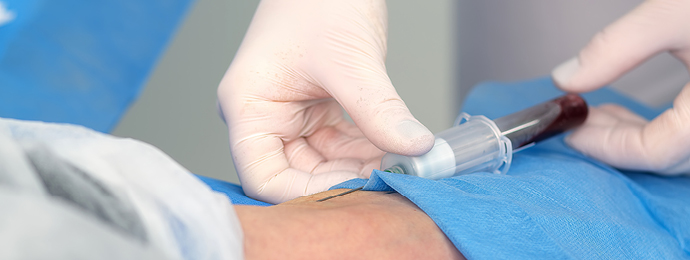
Testing of oestradiol levels is most reliable when performed fasting. A venous blood sample is taken from the subject and then transferred to the analytical laboratory for assessment of the hormone concentration.
In women, the oestradiol standard is mainly dependent on the phase of the menstrual cycle. The reference ranges are as follows[1]:
- follicular phase: 84-970 pg/ml (0.3-3.5 nmol/l),
- ovulation: 13-330 pg/ml (0.48-1.17 nmol/l),
- luteal phase: 73-200 pg/ml (0.26-0.73 nmol/l),
- menopause: 11.2-42 pg/ml (0.04-0.15 nmol/l).
During pregnancy, on the other hand, estradiol standards are as follows:
- First trimester: 188-2497 pg/ml (0.69-9.2 nmol/l),
- 2nd trimester: 1278-7192 pg/ml (4.7-26.4 nmol/l),
- Third trimester: 6137-13460 pg/ml (22.5-50 nmol/l).
In men Normal oestradiol levels are between 11.2 and 50.4 pg/ml (0.04 to 0.18 nmol/l).[1]
Both too high and too low levels can be indicative of a number of abnormalities and diseases.
What does low estradiol mean?
Low oestradiol levels in a woman can cause menstrual disorders, even leading to the complete disappearance of menstruation. It can also affect frequent urinary tract infections, decreased libido, vaginal dryness or mood swings. Low oestradiol levels can also be associated with impending menopause or premature cessation of ovarian function.
Among the most common causes of lower estradiol levels in women are:
- hypogonadism,
- pituitary insufficiency,
- Turner syndrome,
- PCOS,
- eating disorders (anorexia),
- frequent and intense physical exertion,
- metabolic diseases.
In men, low oestradiol levels Decreases sperm motility, leading to a decrease in semen quality. It can also reduce libido, worsening the quality of intercourse.
What can high estradiol levels indicate?
High oestradiol levels in women can affect menstrual irregularity, mood swings or cause general fatigue. In pre-pubertal girls, high levels of oestradiol can accelerate puberty. A result above normal may be associated with:
- liver disorders,
- hyperthyroidism,
- abnormal adrenal function,
- ovarian cancer.
In men, too high estradiol can lead to hypertrophy of the breast gland (gynaecomastia). In both men and women, excessively high E2 levels may be associated with diabetes or hypertension.
An increase in oestradiol levels is not always an alarming condition. Increased values occur during pregnancy (due to its increased synthesis by the placenta), and in the perovulatory phase of the menstrual cycle. Other causes of elevated levels of this hormone may be ovulation-stimulating drugsthrough which multiple follicles mature at the same time.
How much does an estradiol test cost?
The cost of the test depends, among other things, on the specific laboratory and the location in which the facility is located. At InviMed clinics, the example price of an oestradiol test is:
- Warsaw Mokotów - PLN 53,
- Katowice - PLN 50,
- Gdynia - PLN 50.
You can find the exact prices of the examination at individual InviMed clinics in our price list.
Bibliography:
- Rieder, J. K., Darabos, K., & Weierich, M. R. (2020). Estradiol and women's health: considering the role of estradiol as a marker in behavioral medicine. International Journal of Behavioral Medicine, 27, 294-304.
- LE NESTOUR, E., MARRAOUI, J., LAHLOU, N., et al. Role of estradiol in the rise in follicle-stimulating hormone levels during the luteal-follicular transition. The Journal of Clinical Endocrinology & Metabolism, 1993, vol. 77, no. 2, p. 439-442.
- SCHULSTER, Michael, BERNIE, Aaron M., et RAMASAMY, Ranjith. The role of estradiol in male reproductive function. Asian journal of andrology, 2016, vol. 18, no. 3, p. 435.
- OLEJEK, Anita, KRÓLAK, Ilona, BODZEK, Piotr, et al. Interpretation of infertility hormone test results. Ginekologia Praktyczna, vol. 12, no 6, p. 18-24.
The medical information presented should be considered as general guidelines and does not replace the individual judgement of the doctor regarding the medical management of each patient. The doctor, after a thorough examination of the patient's condition, determines the extent and frequency of diagnostic tests and/or therapeutic procedures, taking into account specific medical indications. All medical decisions are made in full consultation with the patient.
Author of the article

Invimed editorial team - we serve patients by solving their fertility problems. We use world medical knowledge, state-of-the-art technology and treatment methods. We are here to make dreams of parenthood come true. The smiles on the faces of happy parents give meaning to our work.
See all articles →