Men are from Mars and women are from Venus.
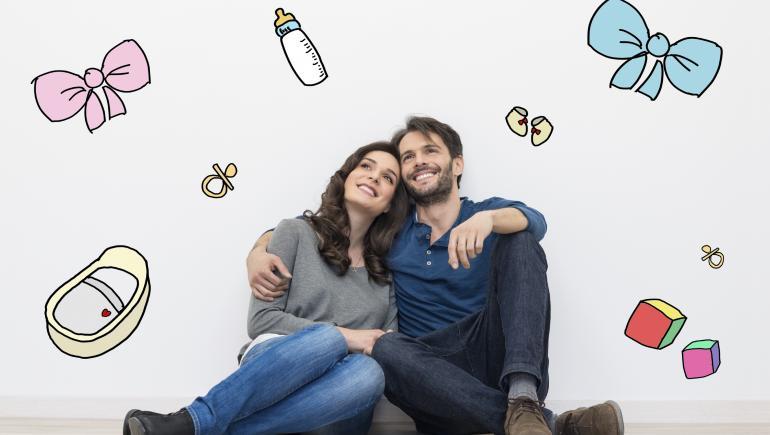
A humorous saying taken from John Gray's guidebook 'Men are from Mars and women are from Venus' explains, or rather punctuates, the reason for the complexity of male-female relationships. It is difficult to disagree with him, because one of the fundamental differences between a woman and a man is the different way in which emotions are expressed. It is important for a woman to realise that if her partner does not externalise his feelings it does not mean that he is not committed.
Although facing infertility and telling loved ones about it is not easy, women find it less difficult to show what they feel. Although both partners are experiencing the situation strongly, she finds it easier to show her emotions, for example by crying. The man is not always able to share his feelings. Usually, his role is to accompany his partner and provide support. It is very common that he does not show his emotions in order to protect the woman. He thinks that by not revealing his concerns she will worry less. In turn, the woman then thinks that her partner is passive, unable to empathise with her situation and therefore does not understand her. Nothing could be further from the truth.
Many years of observations by psychologists indicate that for men, infertility treatment is one of the most difficult life experiences. Experts agree that the most important thing is communication between partners. They should talk to each other about everything - from minor organisational arrangements related to treatment to more difficult topics, which undoubtedly include talking about feelings. This is the only way to get through treatment together, especially when the only way to have a child is to use donor egg cells. When a couple learns that they will not be able to have their own genetic child, the picture of dream parenthood changes strongly. It is a new situation for both of them. Men most often want and desire to have children with a particular woman, in a particular relationship. The sudden confrontation with reality is painful also because this situation is very much experienced by the woman - the most loved person in the world, chosen as a partner for life. Adopting ova is a big emotional call for any woman, requiring her to reconcile many conflicting feelings and thoughts. A man seeing his partner struggling with such a difficult challenge feels stressed, but does not talk about it. Sometimes the partner spends his free time away from home or works more. This is his way of keeping his mind off things and thus accumulating the strength to help the woman overcome all her fears. It is therefore important for her to put herself in his shoes before judging him. This will enable her to better understand the reasons for his behaviour. It is important to remember that each person may react differently to difficult situations and experience them differently.
This is why experiencing and treating infertility involve both partners. Building communication based on the expression of emotions will help them through the uneasy journey of infertility treatment and allow them to start a family that will be a source of happiness for all. The couple can be helped in this process by a psychologist - an impartial person who is not personally or emotionally involved and who shows important aspects and areas to think about.
For anyone facing the decision to adopt an egg, we invite you to a meeting with our psychologist and to watch a film about people who have become the happiest parents thanks to this method.
The medical information presented should be considered as general guidelines and does not replace the individual judgement of the doctor regarding the medical management of each patient. The doctor, after a thorough examination of the patient's condition, determines the extent and frequency of diagnostic tests and/or therapeutic procedures, taking into account specific medical indications. All medical decisions are made in full consultation with the patient.
Author of the article

Invimed editorial team - we serve patients by solving their fertility problems. We use world medical knowledge, state-of-the-art technology and treatment methods. We are here to make dreams of parenthood come true. The smiles on the faces of happy parents give meaning to our work.
See all articles →