Chickpea hummus - a fertility dish.
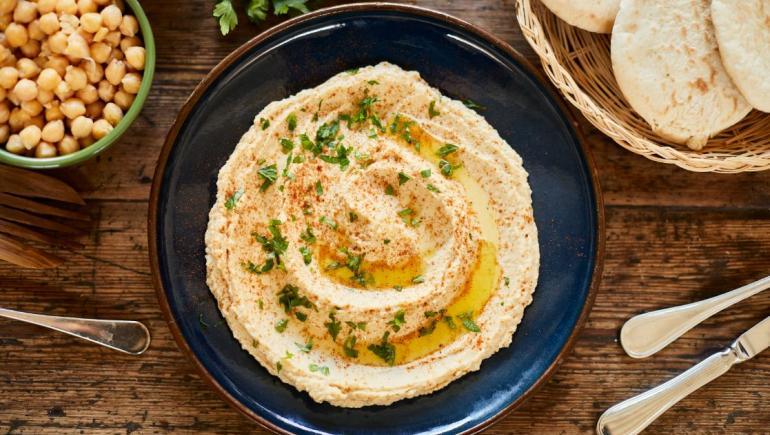
What is hummus and where does it come from?
Hummus, or hummus, is Arabic for chickpea. It is the chickpea that is its main ingredient. Hummus is a velvety paste, ideal for spreading on bread and wheat cakes, but also for eating with raw vegetables (celery, carrots, peppers, chicory) or for lunch with falafel (chickpea or broad bean cutlets).
It originated in the Arabian Peninsula and North Africa. On the one hand, the Lebanese claim to be the creators of hummus, while on the other, the Israelis claim its origin. Whoever invented hummus - they had a head on their shoulders.
The basic ingredients of hummus are: cooked and grated chickpeas, crushed garlic, tahini (sesame paste), lemon juice and spices - most notably Roman cumin. All the ingredients are thoroughly mixed together. Oil and chopped parsley or coriander are sometimes added to the hummus. Some people cook the chickpeas with baking soda (which makes the chickpeas soften more quickly).
The paste can also be approached creatively. Hummus can contain, among other things: sun-dried tomatoes, spinach or roasted vegetables: peppers, beetroot or garlic. The paste blended with the addition of your choice will have a beautiful colour. In addition, the vegetable ingredients will be an additional source of vitamins for fertility.
Recipe for chickpea hummus by Adrianna Barczynska
On our blog we present a recipe for hummus by the nutritionist from the InviMed Katowice clinic - Adrianna Barczynska. Almost all the ingredients are pro-fertility.
Ingredients for homemade hummus
- 1 cup (200 g) chickpeas
- 3-4 tbsp (approx. 60 g) tahini paste
- 2 tbsp sesame oil or olive oil
- 2 tbsp lemon juice
- 1-2 cloves of garlic
- ½ teaspoon of cummin (romaine cumin)
- 1 teaspoon salt
- pinch of pepper
Preparation
Soak the chickpeas and leave overnight (8-10 hrs) in a cool place. Then drain and cook in fresh water until tender (about 1 hour). Cook the pods uncovered and remove the scum that forms during cooking. Do not pour off the water after cooking.
Drain the chickpeas and transfer to a blender or blender container. Add, tahini paste, garlic clove, cumin, sesame oil or olive oil, salt, pepper and lemon juice. Remember that the tahini adds bitterness and the lemon adds acid - by adjusting the amount of both, you adjust the flavour of the hummus. While blending, gradually add the cooking water to get the right paste consistency.
If you want to serve the hummus as in the photo, sprinkle the surface of the strips with ground cumin and chopped parsley, then pour on a little olive oil. Such hummus is ready to eat.
Calorific value
A whole portion of hummus, prepared with the ingredients listed above, is about 550 g and about 1230 kcal. A portion to spread on one sandwich is about 20 g, or 44 kcal.
Hummus and diet for fertility
Hummus is healthy and pro-fertility because of the ingredients that are used in its production. Therefore, it is worth ensuring that they are wholesome - sourced from the best sources. This will ensure that your hummus has fertility-boosting vitamins and a range of health properties and nutritional value.
Chickpeas
Chickpeas are a rich source of protein, and when combined with whole grain products can be a complete source of essential amino acids. Its richness in fibre and protein can help to improve ovulation.
It is also a good source of B vitamins, very important in the diet for improving fertility. B vitamins are responsible for the metabolism of vitamins and minerals, are involved in blood formation and support the correct implantation of the embryo.
Chickpeas contain significant amounts of folic acid, which influences the growth of new cells, prevents the occurrence of birth defects in the foetus and is involved in spermatogenesis.
Chickpeas also contain a lot of fibre, which regulates glycaemia, promotes weight loss, lowers blood pressure and cholesterol, and supports intestinal function.
Tahini (sesame paste)
The ingredients in tahini influence the proper functioning of the nervous system, as well as the regulation of blood cholesterol levels and blood pressure.
The main ingredient in the paste, sesame, is a source of unsaturated fatty acids, B vitamins and folic acid. It provides antioxidants and reduces inflammation in the body.
Thanks to its tahini content, hummus is a source of good fats, which are important for regulating and inducing ovulation. It is also a bomb of antioxidants. These are important for fertility because they affect the menstrual cycle, protect the reproductive tract against infections and reduce the risk of miscarriage and promote normal foetal development (including vitamin A and E).
Garlic (fresh, Polish)
Garlic has anticoagulant properties and improves the elasticity of blood vessels, which is extremely important for improving fertility in both men and women.It contains allicin, which prevents the build-up of plaques in the arteries and increases blood flow to the genitals in the area where sperm production takes place. It is a natural antibiotic, so it helps the body fight bacteria and fungi.
Lemon
Lemon is a good source of vitamin C, E and beta-carotene, B vitamins and folic acid. It provides a range of powerful antioxidants that counteract free radicals and reduce inflammation in the body. Vitamin C, in turn, aids iron absorption and is also essential for collagen biosynthesis, and this is particularly important for ovarian follicle growth and ovulation.
Why make homemade hummus?
Hummus can be a good addition to a wholesome, balanced pro-fertility diet to support pregnancy, even if it has to be reductive, i.e. geared towards weight loss. It is worth making it yourself - hummus sold in shops often contains preservatives, such as potassium sorbate. You can also find pastes and extracts of unknown origin and unspecified amounts of salt and sugar in their ingredients.
The great thing about homemade hummus is not only that you have almost complete control over the quality and origin of the ingredients, but also that you can make it exactly according to your own sense of taste - the acidity can easily be adjusted with lemon juice, the bitterness and challah flavour with tahini paste, the consistency with chickpea cooking water and oil. The spiciness of hummus can be added either with hot pepper powder or with fresh or pickled vegetables.
The medical information presented should be considered as general guidelines and does not replace the individual judgement of the doctor regarding the medical management of each patient. The doctor, after a thorough examination of the patient's condition, determines the extent and frequency of diagnostic tests and/or therapeutic procedures, taking into account specific medical indications. All medical decisions are made in full consultation with the patient.
Author of the article

Invimed editorial team - we serve patients by solving their fertility problems. We use world medical knowledge, state-of-the-art technology and treatment methods. We are here to make dreams of parenthood come true. The smiles on the faces of happy parents give meaning to our work.
See all articles →