Coronavirus and trying for a baby and pregnancy.
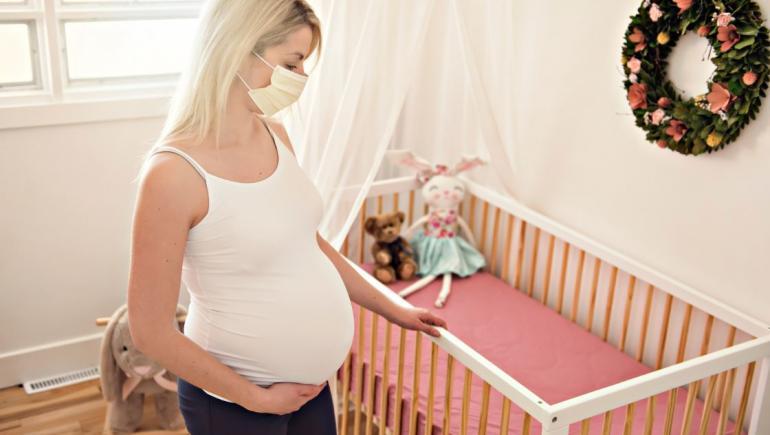
The guidelines presented by the Polish Society of Reproductive Medicine and Embryology, the Polish Society of Gynaecologists and Obstetricians, the Section of Fertility and Infertility of the Polish Society of Gynaecologists and Obstetricians and the National Consultant in Gynaecological Endocrinology and Reproductive Endocrinology aim to limit the spread of the SARS-CoV-2 coronavirus epidemic and ensure the safety of pregnant women and newborns. It is about safety that we talk to Dr Marcin Trzeciak, a gynaecologist-obstetrician from the InviMed infertility treatment clinic in Wrocław.
Why do scientific societies recommend that couples struggling with infertility should continue treatment at a later date or, if they are waiting for a transfer, postpone it?
Dr Marcin Trzeciak: This is dictated by concern for the safety of patients, potential pregnant women, fetuses and newborns, and medical staff. I would like to point out that the information regarding the lack of negative effects of SARS-CoV-2 infection and COVID-19 disease on pregnancy is based on the analysis of few data and needs to be confirmed.
Therefore, the scientific societies primarily recommend following national recommendations (Ministry of Health and Chief Sanitary Inspectorate), which are continuously updated and override the recommendations of the scientific societies. Current recommendations strongly indicate the need to limit movement and contact with other people.
What about couples who, for the time being, are not treated with assisted reproduction techniques: insemination or IVF?
Current recommendations on the epidemic situation recommend that everyone hold off on their maternity plans. Couples currently undergoing assisted reproduction procedures should, depending on the stage of treatment, either stop the procedure or postpone their decision to become pregnant by using an embryo or oocyte freezing procedure. Couples who are trying to get pregnant naturally should also stop their efforts.
If a partner has contracted COVID-19, can the disease affect the quality of his semen, the genetic material carried by the sperm?
Current guidelines, due to the epidemic situation, recommend postponing plans for family enlargement. At present, we do not yet have any reliable studies on the effect of COVID-19 infection on semen quality. However, it can be assumed that, analogous to any other infection causing weakness in the body, an elevated body temperature, as well as medication taken during treatment, can weaken semen parameters.
What are the dangers of getting pregnant during an outbreak?
To date, there has been no clear evidence of a negative effect of SARS-CoV-2 virus infection on pregnancy. It is a disease that we are still 'learning' about. However, it is important to bear in mind the risks associated with a pregnant woman possibly contracting COVID-19 and, consequently, the need for treatment with drugs that can cross the placenta into the foetus. The high temperature associated with the infection and life-saving pharmacotherapy for the mother can have a negative impact on the foetus. Pregnant women should therefore be particularly scrupulous in following the advice to limit contact with others.
Can coronavirus contribute to pregnancy miscarriage?
At present, there is no evidence that coronavirus infection adversely affects the course of pregnancy, including in its early stages. There are known cases of pregnant women infected with COVID-19 who delivered babies without infection. However, due to the small number of cases, widespread caution is recommended.
What consequences can coronavirus infection have for the newborn?
To date, several cases of COVID-19 infection in newborns have been reported worldwide. However, these were not infections acquired during pregnancy, but later. Unfortunately, we do not currently have reliable data to be able to realistically assess the course of the disease and the risk of complications.
Could conditions in maternity wards change during an outbreak? Is there a risk that help for a woman who needs, for example, a uterine curettage after a miscarriage will not be provided?
In response to the current outbreak, dedicated Units have been set up to treat patients infected with COVID-19, including pregnant women. This makes it possible to secure the possibility of performing other medical procedures in the other centres without hindrance. This does not change the fact that it is recommended that elective procedures be postponed and only acute, i.e. non-urgent, cases be carried out.
References:
- http://www.ptmrie.org.pl/
- http://ptgin.pl/
- https://www.eshre.eu/
- https://www.cdc.gov/
- https://www.asrm.org/
***
Dr Marcin Trzeciak, MD
Specialist gynaecologist-obstetrician. Graduate of the Faculty of Medicine at the Medical University of Wrocław. Senior assistant at the Gynaecology-Obstetrics Ward of the Falkiewicz Specialist Hospital in Wrocław. Head of the ultrasound laboratory. In the InviMed clinic in Wrocław he provides treatment for infertile couples. Member of the Polish Gynaecological Society (PTG).
___________
Subsidised in vitro treatment at the InviMed clinic in Wroclaw
InviMed in Wrocław implements a programme of in vitro funding from the budget of the City of Wrocław, dedicated to its residents. Couples interested in participating in the programme are invited to contact InviMed at 500 900 888.
The medical information presented should be considered as general guidelines and does not replace the individual judgement of the doctor regarding the medical management of each patient. The doctor, after a thorough examination of the patient's condition, determines the extent and frequency of diagnostic tests and/or therapeutic procedures, taking into account specific medical indications. All medical decisions are made in full consultation with the patient.
Author of the article

Invimed editorial team - we serve patients by solving their fertility problems. We use world medical knowledge, state-of-the-art technology and treatment methods. We are here to make dreams of parenthood come true. The smiles on the faces of happy parents give meaning to our work.
See all articles →