Nobel for in vitro.
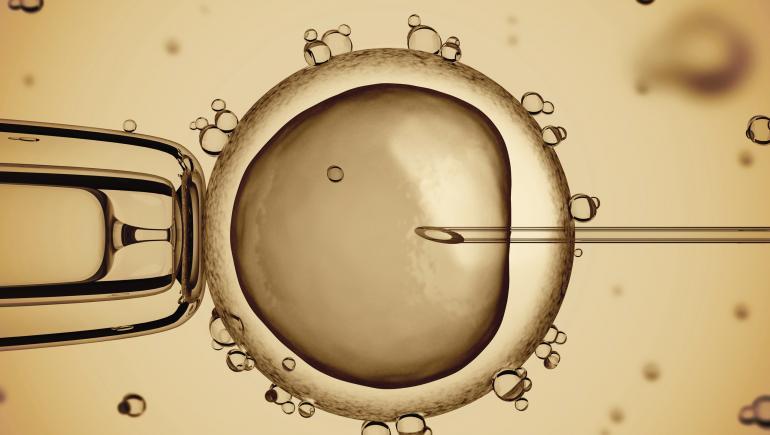
The Nobel Prize for the development of the in vitro method was awarded to the British Robert Edwards in 2010. In its justification, the Nobel Committee wrote: "His achievements have made it possible to treat infertility, which affects a large proportion of humanity, more than 10 per cent of all couples worldwide."
The obsession with overcoming infertility gripped the scientist as early as the 1950s. He believed that if an egg cell could be fertilised in the laboratory, a healthy baby would be born when it was inserted back into the uterus.
In order to do this, many questions had to be answered. How do hormones regulate the fertilisation process? How to make the sperm survive and be able to be activated outside the body? How do we obtain mature egg cells?
It took Edwards more than a dozen years. One of the milestones turned out to be an encounter with surgeon and gynaecologist Partick Steptoe, who had mastered a new surgical technique: laparoscopy. It allows one to get inside the body without extensive and long-healing incisions. It was perfectly suited to extracting ova from inside a woman's ovary. From then on, they worked together. Together, they succeeded in bringing the development of the human embryo to the eight-cell stage. Their achievement was described in 1970 by "Nature". Eight years later, the first child conceived through artificial insemination was born.
It took almost 30 years from the conception of the idea in Edwards' head to its realisation.
The medical information presented should be considered as general guidelines and does not replace the individual judgement of the doctor regarding the medical management of each patient. The doctor, after a thorough examination of the patient's condition, determines the extent and frequency of diagnostic tests and/or therapeutic procedures, taking into account specific medical indications. All medical decisions are made in full consultation with the patient.
Author of the article

Invimed editorial team - we serve patients by solving their fertility problems. We use world medical knowledge, state-of-the-art technology and treatment methods. We are here to make dreams of parenthood come true. The smiles on the faces of happy parents give meaning to our work.
See all articles →