Painful menstrual syndrome. What you need to know .
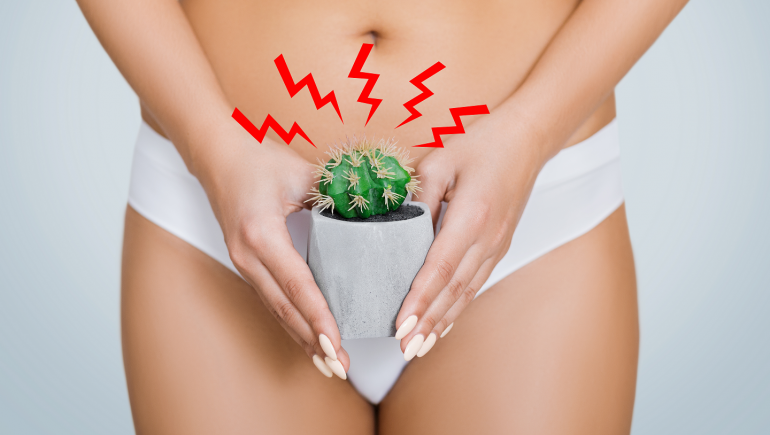
When does menstruation become a problem?
The onset of menstruation is treated as a transitional moment in a woman's life. It is the boundary that separates being a girl from of becoming a woman. This is a very damaging stereotype - monthly bleeding does not mean psychological maturity.and ics, but only the body's readiness for fertilisation. This should always be kept in mind.
The hormones oestrogen and progesterone are responsible for the onset of menstruation. The phenomenon involves the cyclical exfoliation of the uterine epithelium (endometrium) under the influence of changes in the concentration of sex hormones. The result is bleeding occurring regularly every 21 to 35 days. This is known as the menstrual cycle, and its specific length, as well as the length of the bleeding itself, is an individual characteristic of each woman. Very often, already at the onset of the first menstrual period, unpleasant and painful physical symptoms appear, which can be gathered under the common name of painful menstruation syndrome.
Menstruation doesn't have to hurt!
There is still too little talk about the fact that menstruation doesn't have to hurt - and it certainly doesn't have to hurt that much!
What is painful menstrual syndrome?
Unfortunately, the discomforts and malaise associated with menstruation are often regarded as an unpleasant necessity. The ailments that women most often complain of during their period are:
- irritability;
- strong emotions;
- pain in the ovaries and lower abdominal area;
- back pain;
- weakening;
- dizziness and headaches;
- diarrhoea;
- trembling hands;
- heart palpitations;
- nausea and vomiting.
It is said that every woman has experienced a painful period at least once. There is still too little talk about the fact that menstruation doesn't have to hurt - and it certainly doesn't have to hurt that much! Painful menstrual syndrome, or GBS for short, is the term for the painful perimenstrual experience [1]. The ailment can have two sources - primary or secondary. Some women suffer so much that they are unable to perform their daily duties. Going to work or school without strong painkillers becomes unfeasible. Where does this problem come from and how can it be remedied?
Painful menstrual syndrome - primary and secondary
Primary painful menstrual syndrome is related to a hormone disorder. It occurs most often during puberty, when the human body undergoes a series of huge changes. This is due to the high concentration of prostaglandins, which lead to increased and painful uterine contractions. So far, no clear reason has been shown as to why some women produce more of these hormones than others. However, it is comforting to know that painful menstruation not infrequently disappears spontaneously, usually after the birth of the child.[2]
If you are experiencing painful menstrual periods, especially after several years of pain-free bleeding, it is worth seeing your doctor right away to establish whether you are dealing with secondary PMS. In this case, you cannot count on the pain disappearing on its own. Secondary dysmenorrhoea can indicate the presence of a medical condition in the body. An appropriate and professional diagnosis is essential in this case. Diseases that most commonly cause PMS include:
- uterine polyps;
- inflammation in the pelvis;
- endometriosis;
- anatomical defects of the reproductive organs;
- uterine myomas;
- irritable bowel syndrome;
- coeliac disease.
In the context of pain and menstrual disorders, it is particularly worth noting endometriosis, which, if untreated, can lead to problems with pregnancy.
Treatment options for painful menstrual syndrome
The therapy chosen by the doctor will be closely related to the source of the problems. The most common way of dealing with menstrual discomfort is through painkillers and diastolic medication (primary PMS). There are also special treatments (e.g. transcutaneous electrostimulation) and series of exercises that can provide relief. It is worth seeing a urogynaecological physiotherapist for this.
If a doctor diagnoses a disease or disorder that is the source of the pain (secondary BPH), he or she may recommend surgical treatment or pharmacotherapy. Taking care of intimate health is extremely important - failure to do so can end not only in pain, but in serious health problems. Gynaecological prophylaxis should become a mandatory item on every woman's calendar.
Painful periods and planning a pregnancy
Can painful periods affect pregnancy planning? Yes, as long as the underlying cause of GBS is a disease, such as endometriosis. Then a pain pill is definitely not enough. The chance of pregnancy depends on the specific medical diagnosis. Many conditions or disorders are subject to effective treatment. That is why it is important to choose responsible specialists with experience who will take care of our health and future successful motherhood.
Bibliography
[1] https://pulsmedycyny.pl/zespol-bolesnego-miesiaczkowania-objawy-przyczyny-leczenie-973465
[2] https://www.forumginekologii.pl/artykul/pierwotne-bolesne-miesiaczkowanie-jaka-terapie-hormonalna-zastosowac
Authorisation of content:
Blanka Malczewska, M.D. - specialist gynaecologist-obstetrician from the InviMed Clinic in Gdynia
The medical information presented should be considered as general guidelines and does not replace the individual judgement of the doctor regarding the medical management of each patient. The doctor, after a thorough examination of the patient's condition, determines the extent and frequency of diagnostic tests and/or therapeutic procedures, taking into account specific medical indications. All medical decisions are made in full consultation with the patient.
Author of the article

Invimed editorial team - we serve patients by solving their fertility problems. We use world medical knowledge, state-of-the-art technology and treatment methods. We are here to make dreams of parenthood come true. The smiles on the faces of happy parents give meaning to our work.
See all articles →