Hashimoto's - how does it affect pregnancy and its course?.
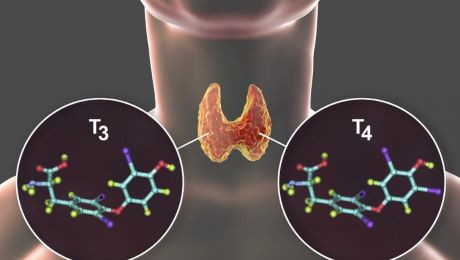
The thyroid gland is part of the endocrine system that produces the hormones triiodothyronine (T3) and thyroxine (T4). Among other things, they affect the production of energy, providing a kind of 'fuel' for the metabolism and the proper functioning of all the organs of our body. Its under-activity poses a major threat, as it impairs the functioning of numerous mechanisms. This includes the function of the reproductive system. Does this mean that thyroid diseases, such as Hashimoto's, affect fertility and getting pregnant?
What is Hashimoto's?
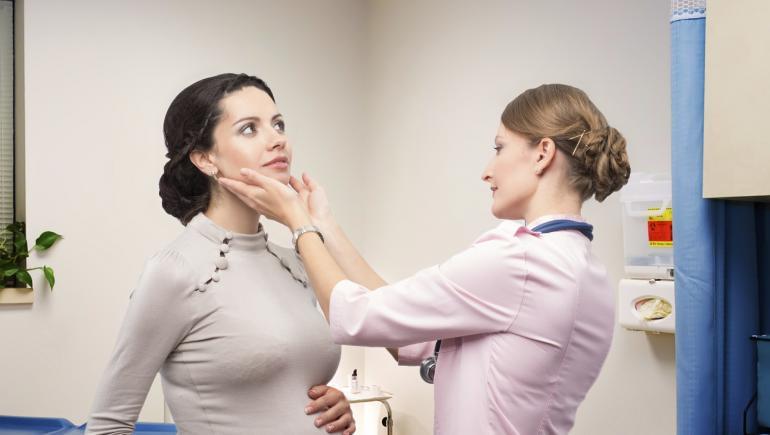
Hashimoto's disease is a condition in which the body's own immune system attacks the thyroid gland, a small gland located at the base of the neck, below the thyroid cartilage (whose protuberance is called the Adam's apple in men). The inflammation caused by this disease, also known as chronic lymphocytic thyroiditis, often leads to hypothyroidism. The disease usually progresses slowly over a period of years and causes damage to the thyroid gland, which in turn causes a drop in its hormone levels in the blood.
Today's medicine does not fully know what causes the antibodies of the immune system to attack the thyroid gland. Some scientists believe that the reaction may be triggered by a virus or bacteria, while others think it is genetically determined. However, certain risk factors can be identified.
Hashimoto's is much more common in women, and most often occurs in middle age. People who have a family history of Hashimoto's or who suffer from another autoimmune disease are more likely to be ill.
Symptoms of Hashimoto's
At first, you may not notice the signs of Hashimoto's at all. Certain symptoms may start to appear slowly, even over a period of years, and it is not easy to associate them with this particular disease. One fairly characteristic symptom is swelling in the front of the throat (goitre).
Other symptoms include:
-
fatigue and sluggishness,
-
increased sensitivity to cold,
-
constipation,
-
pale, dry skin and nail problems,
-
hair loss,
-
swelling on the face,
-
unexplained weight gain,
-
depression, anxiety, worse moods,
-
muscle and joint pains,
-
excessive or prolonged menstrual bleeding,
-
memory and concentration problems.
Hypothyroidism and pregnancy planning
Low levels of thyroid hormones can interfere with ovulation. Because of this, irregular periods and anovulation can occur. Thyroid hormones are actually important in all phases of oocyte development and survival after fertilisation.
The T3 hormone helps:
-
thicken the lining of the uterus (endometrium), which allows implantation,
-
move the fertilised egg cell down the fallopian tubes towards the uterus, where it can implant.
Hypothyroidism leads to an increase in testosterone levels, disrupts levels of ovarian follicle-stimulating hormone, luteinising hormone and oestrogen and progesterone. This results in a disruption of ovulation in women.
Hashimoto's and pregnancy
Thyroid hormones are crucial for the normal development of the baby's brain and nervous system. During the first trimester of pregnancy, the baby is dependent on the mother's supply of thyroid hormones. Around week 12, the baby's thyroid gland starts to work independently, but does not produce enough hormones until week 18-20 of pregnancy.
Untreated hypothyroidism during pregnancy can lead to:
-
pre-eclampsia - a dangerous rise in blood pressure in late pregnancy,
-
anaemia,
-
pregnancy loss,
-
low birth weight,
-
lower intelligence quotient in the child.
Doctors often recommend thyroid tests as early as when trying to have a baby, in order to avoid the aforementioned risks in advance.
Worth knowingHashimoto's fortunately does not prevent you from getting pregnant.
The basic test for hypothyroidism is the determination of the level of the hormone TSH, which the pituitary gland produces to stimulate the thyroid gland to produce hormones.
People at high risk or with symptoms of Hashimoto's disease or other autoimmune diseases should also have their TSH levels tested during pregnancy.
If Hashimoto's is suspected, the doctor will also order anti-TPO and anti-TG thyroid antibodies, serum levels of the thyroid hormones thyroxine (fT4) and triiodothyronine (fT3) and an ultrasound of the thyroid gland.
Is pregnancy with hypothyroidism safe?
Pregnancy with Hashimoto's and hypothyroidism can be perfectly safe as long as the condition is diagnosed.
Research is therefore crucial. Although Hashimoto's is not curable, patients can be given missing thyroid hormones. Such a medication is levothyroxinewhich has the same effect as the hormone produced in the thyroid gland. Its intake leads to the normalisation of TSH levels and the return of normal body function. In the case of pregnancy, it is important that the dose is correctly selected and regulated at each stage of pregnancy.
A proper diet, rich in iodine, selenium, zinc, vitamin D and omega-3 fatty acids, is also helpful. It is important to eat a healthy diet, provide the body with a complete set of vitamins and not to overload the digestive system.
The medical information presented should be considered as general guidelines and does not replace the individual judgement of the doctor regarding the medical management of each patient. The doctor, after a thorough examination of the patient's condition, determines the extent and frequency of diagnostic tests and/or therapeutic procedures, taking into account specific medical indications. All medical decisions are made in full consultation with the patient.
Author of the article

Invimed editorial team - we serve patients by solving their fertility problems. We use world medical knowledge, state-of-the-art technology and treatment methods. We are here to make dreams of parenthood come true. The smiles on the faces of happy parents give meaning to our work.
See all articles →