In vitro funding 2026
The 2026 in vitro reimbursement programme is the government's financial support for couples struggling with infertility. Funding amounts to PLN 2.5 billion for the period 2024-2028, which guarantees PLN 500 million per year. The programme covers up to 4 IVF cycles with own cells, 2 procedures with donor cells and 6 cycles with embryo adoption. The key criteria are age - woman up to 45, man up to 55. Reimbursement also covers medication, psychological counselling and oncopulation. Check out the detailed terms and conditions and find out how to apply for funding for your infertility treatment.

Highlights
- The 2026 IVF reimbursement program covers up to 4 cycles with own cells, 2 procedures with donor cells and 6 cycles embryo adoption.
- The funding amounts to £2.5bn for the period 2024-2028, covering all costs for procedures, stimulant medication and psychological consultations.
- Application via the online form ensures that a consultant is in touch within 24 hours, the first visit includes a meeting with a midwife and a medical consultation.
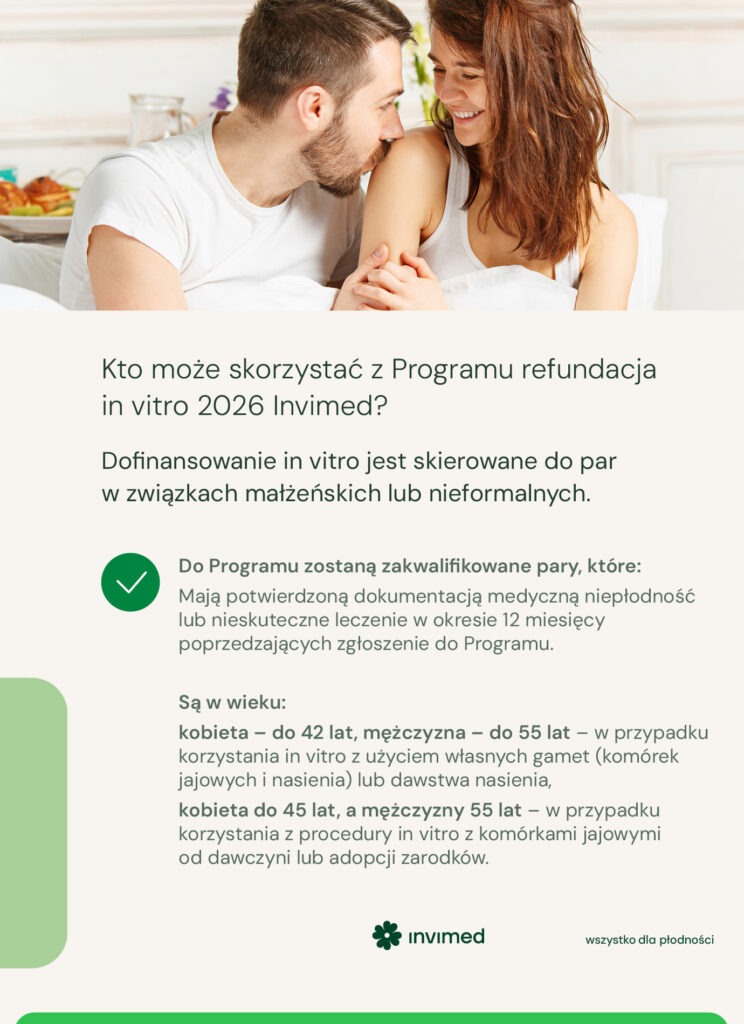
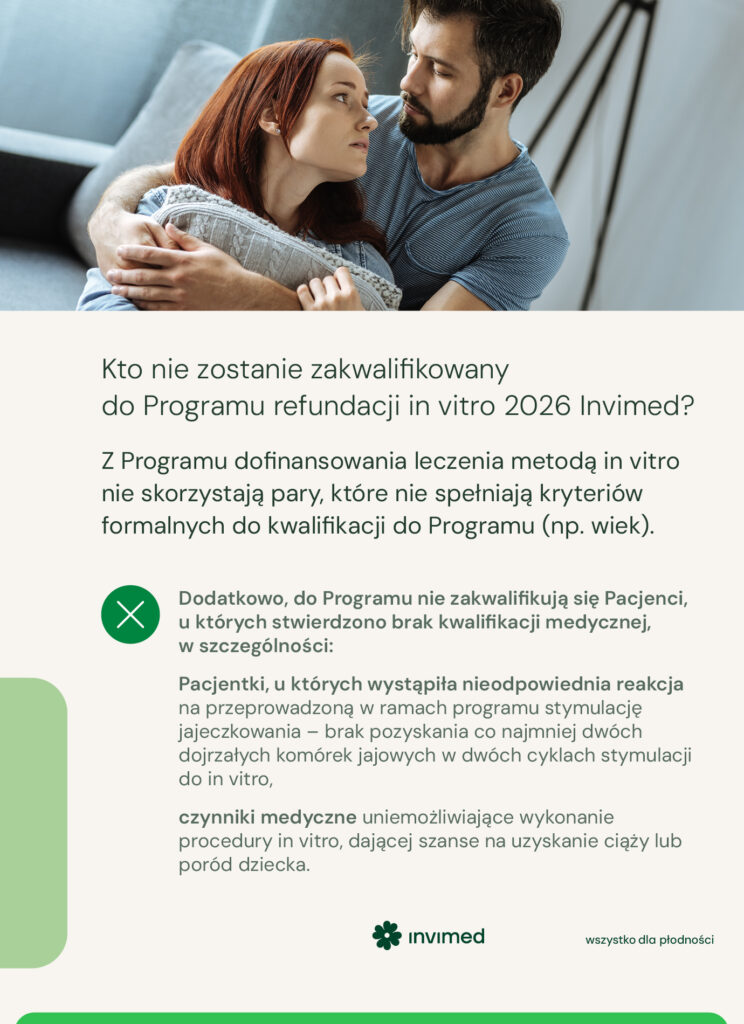
Criteria for joining the in vitro refund programme, co-financing 2026
The main criteria for entering the IVF Reimbursement Programme are:
-
age (both male and female)
-
the couple's medical history concerning treatment of infertility
How to register for the 2026 in vitro fertilisation reimbursement programme?
To obtain the necessary information and the application for IVF reimbursement, please:
-
Fill in the form on the website using the option „Contact us today”.”
-
In the mobile version (on a smartphone), the form is located under the 'Write' button at the bottom right of the screen.
Our consultants will contact you within 24 hours (on working days) of your request to arrange an appointment.
To Invimed clinics You can also go in person during the opening hours of the establishments concerned.
In the event of a large number of applications, the contact time may be longer. We will inform you of this by e-mail or SMS.
IVF reimbursement application - where to find it and how to fill it in?
Applications for IVF reimbursement are available at all clinics qualified for the Programme and more information can be found on the website: Application for in vitro funding - Invimed
The document should be completed with all the required information - in particular that relating to the infertility diagnosis and treatment to date. If patients have any doubts about how to complete the application, they can seek the assistance of consultants available at the facilities.
How it goes first visit in vitro reimbursement 2026?
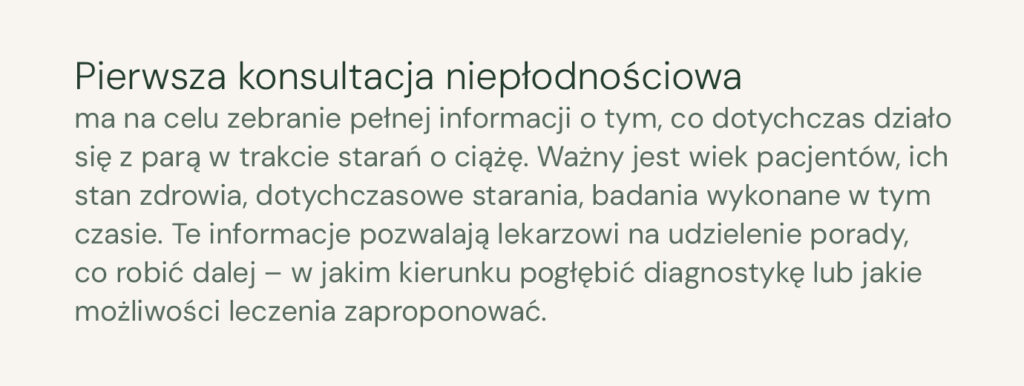
First visit The couple at our clinic begins with a meeting with the midwife - the Care Coordinator - who will prepare the necessary documentation. This is followed by a medical consultation. During the visit, the doctor will carry out a detailed history and a gynaecological examination, if necessary.
What test results should you bring with you to your first appointment under the 2026 in vitro fertilisation reimbursement scheme?
Remember to prepare and bring the results of all previous tests and treatments. It is a good idea to provide a full medical history of treatment of infertility. On the basis of these, the doctor will decide during the visit whether additional tests are necessary or whether any need to be repeated.
Where can you take advantage of the 2026 in vitro refund?
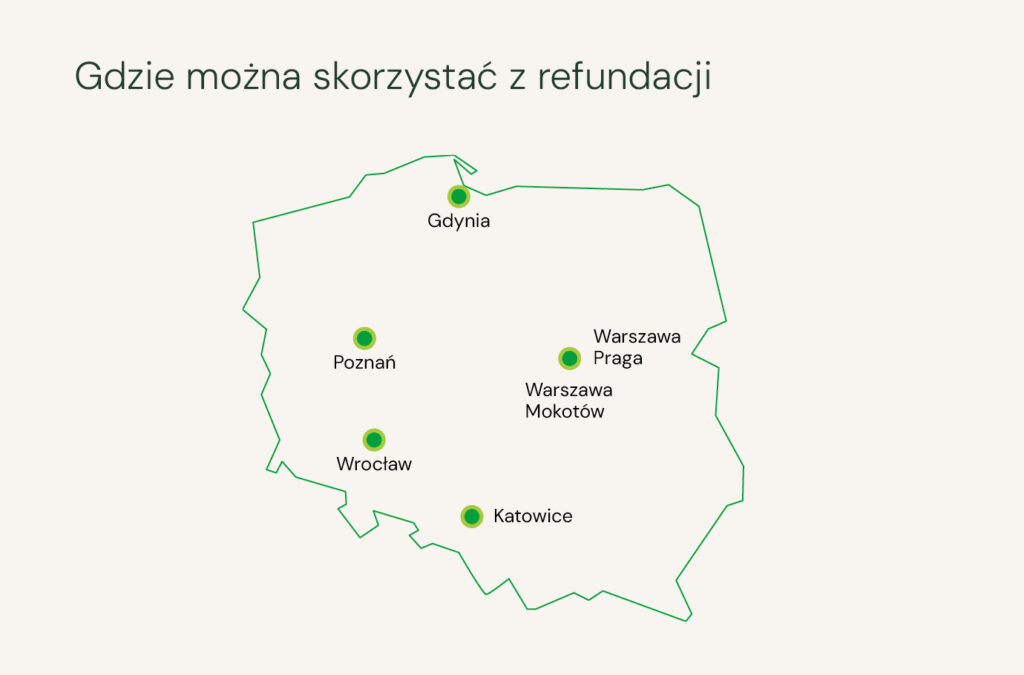
Which procedures are reimbursed under the IVF Reimbursement Programme?
Once a couple qualifies for the IVF Reimbursement Programme, all necessary parts of this procedure are financed under this Programme.
In vitro procedures
Couples have the opportunity to benefit from 6 IVF procedures under the Programme, viz:
-
A maximum of 4 IVF cycles with your own reproductive cells or with donor sperm,
-
A maximum of 2 in vitro procedures with ova from a donor - with the possibility of fertilising a maximum of 6 reproductive cells in one procedure,
-
maximum of 6 IVF cycles with embryo adoption - one embryo transfer equals one cycle of treatment.
Reimbursement of in vitro with donor egg cells
Realising the dream of motherhood can be difficult, especially in the absence of one's own ova. Thanks to the IVF Programme using donor egg cells, women struggling with this challenge are given the chance of pregnancy and motherhood.
Reasons for the lack of own ova can include age, genetic conditions, past surgical interventions. In such cases oocyte adoption from a donor is becoming a viable and effective option for motherhood. Donors are anonymous, healthy, women who voluntarily share their cells to help others fulfil the dream of having a child.
In order to benefit from government support under the IVF programme with donor ova, certain criteria must be met: the woman must be under 45 years of age, the partner's age must be under 55. You can benefit from 2 IVF procedures with donor egg cells - with the possibility of fertilisation of a maximum of 6 reproductive cells in one procedure.
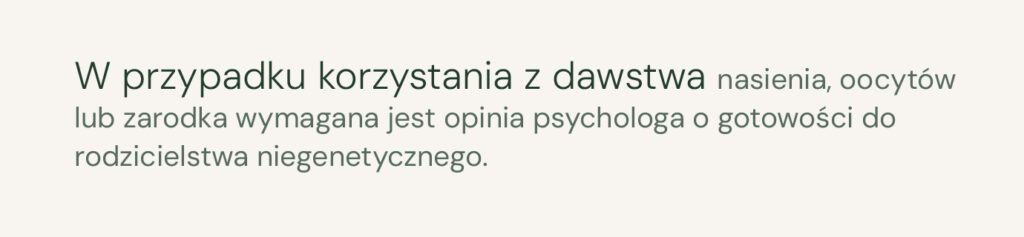
An important part of the qualification for egg cell donation is the opinion of a psychologist who will confirm the couple's readiness for parenthood, especially in the context of accepting that the child will not be biologically related to the future mother.
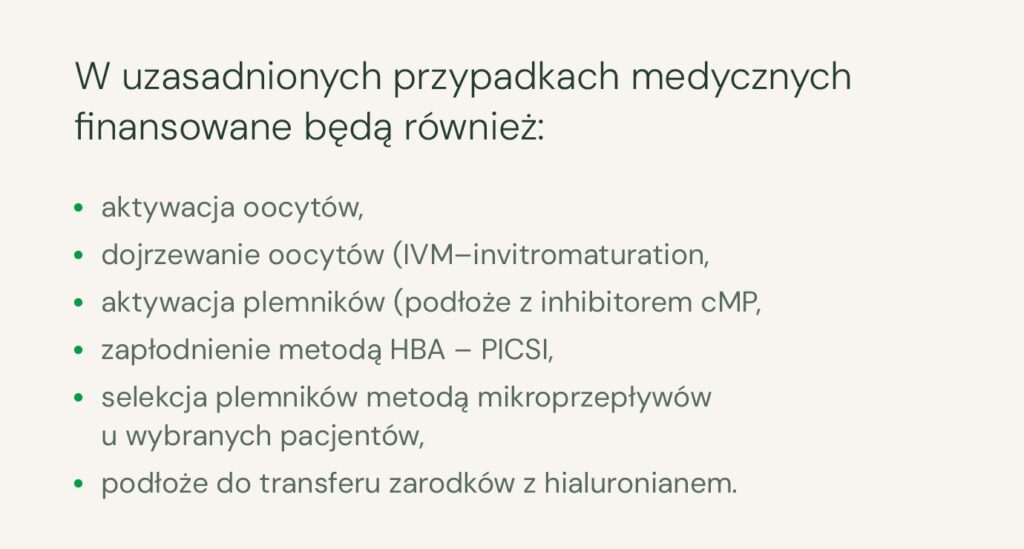
Cryotransfers from previous procedures
The reimbursement will also cover cryotransfers in couples who have cryopreserved embryos as part of previous procedures (independent of their source of funding). In this case, participation in the Programme will be determined by age: at the date of application, the woman is under 45 and the man is under 55).
Couples with embryos frozen before 01.06.2024 can benefit from KET/FET of these embryos under the programme without affecting the cycle limit, but at the same time without a qualifying visit. This means that the couple must apply for the programme via a form with the application queue, sign the programme regulations and perform the necessary tests at their own expense.
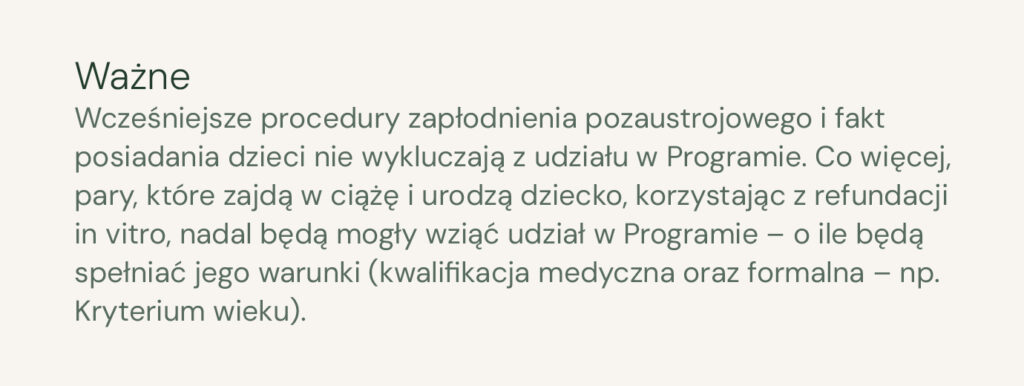
Monitoring visits, hormone determinations (progesterone) and the transfer itself will already be billed under the programme. Only after all embryos have been used will the couple have a qualification visit and begin cycle 1.
Transfer of such embryos will not be counted as a cycle and couples will still be entitled to a sixfold individualised assisted reproduction procedure.
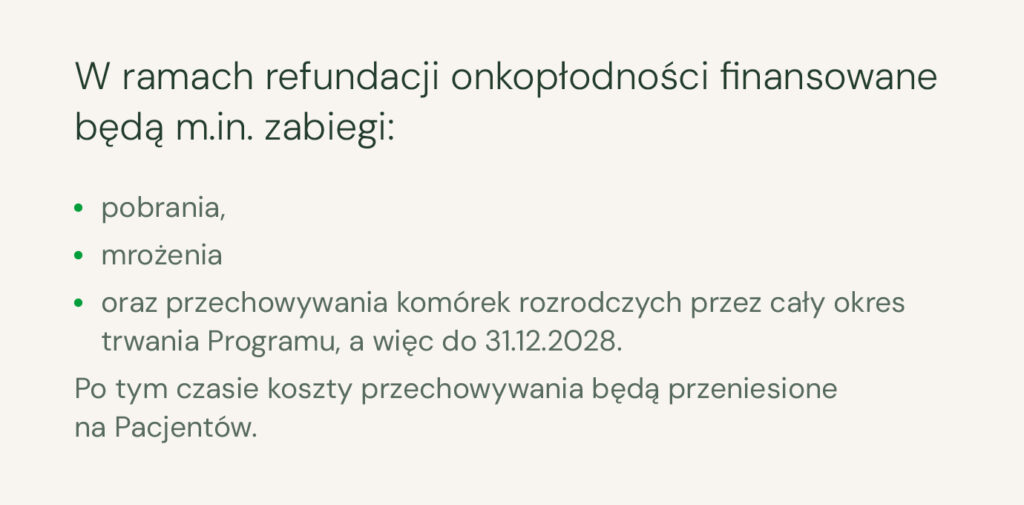
Oncoplasticity - funding of procedures to safeguard reproductive cells before or during oncological treatment
Oncoplasticity is included in the Government Programme, it also assumes the possibility of securing reproductive material (ova or sperm) in patients who are before or during treatment for oncological protection.
For oncoplastic procedures, patients who have not completed:
-
40 years old - women,
-
45 years old - men.
Patients receiving reimbursement Oncoplasticity, will be admitted to the programme centres out of turn.
Consultation with psychologist
Under the Programme, patients can benefit from unlimited consultations with a psychologist. Consultation with a psychologist is mandatory for patients undergoing procedures with donation (ova, sperm, embryos).
Reimbursement of in vitro drugs
On 1 July 2024, REFUND NOTICE No. 75 was announced, which includes new indications and changes to drug and chemotherapy programmes, as well as new indications and changes to pharmacy reimbursement - so patients eligible for the Programme will also be able to benefit from reimbursed pacing drugs.
For more information on IVF drug reimbursement and answers to frequently asked questions, see the article -> Reimbursement of in vitro drugs - frequently asked questions - Invimed
The amount of in vitro funding between 2024 and 2028 is PLN 2.5 billion, which means an amount of PLN 500 million per year. From the moment of qualification for the in vitro procedure or oncoplastic procedures, the enrolled services will be provided to patients under the Scheme (patients will not pay the cost of these procedures).
What is not included in the Government Reimbursement Programme?
Preimplantation diagnosis is not a service included in the Programme and is not reimbursed. Couples qualified for the Programme are allowed to perform preimplantation diagnostics on a commercial basis if indicated.
USEFUL LINKS
The IVF qualification process can vary in duration depending on individual factors such as test results, availability of specialists or administrative procedures. On average, it takes several weeks from the first appointment to the start of the procedure.
To make an initial appointment at the Invimed clinic, please:
- call the helpline on 500 900 888;
- complete and submit the form on this page;
- send an e-mail to: invimed@invimed.pl;
- sign up at the reception of one of the 6 Invimed clinics in Poland.
Oocyte retrieval, or ovarian puncture, is the final stage of hormonal stimulation, which is carried out as part of the IVF procedure. The puncture usually takes several minutes and the procedure is performed under general anaesthesia. During ovarian puncture, the doctor takes the follicles, which contain the egg cells, from the ovaries. In the next stage, the ova will be fertilised with the sperm of the partner or donor.
On the day of the ovarian puncture, you must be fasting - no food or drink, including water, may be consumed for at least eight hours before the scheduled procedure. You may only swallow medication first thing in the morning, drinking a small amount of water. It is also important to take care of personal hygiene.
The couple must attend the surgery with identification documents. If there is any history of anaesthesia concerns, please bring your medical records with you for the anaesthetist to see.
The patient may also carry something light to eat after the LP so as not to be fasting for long after the procedure and something to drink (in autumn and winter, a warm drink from a thermos would be best). We advise against any products that, if eaten on an empty stomach, can cause nausea (including raw fish and hard to digest fruit).
After the procedure, the patient remains for observation in the clinic for approximately 2-3 hours. However, no driving is allowed for 24 hours after the procedure, so it is advisable to think in advance about how you will get to and from the clinic.
The day of the IVF procedure, or embryo transfer, is an important moment for every couple trying to have a baby. The whole procedure usually takes place in a few simple but very precise steps. Firstly, the patient is prepared for the procedure and then the embryo, which has been grown in the laboratory, is transferred into the uterine cavity. The embryo is usually 2-5 days old, already mature enough to start implantation.
The procedure itself is short and painless. The insertion of the embryo is done through the vagina using a thin catheter, and the whole thing is monitored continuously with ultrasound. Depending on the situation, one embryo is usually transferred to reduce the risk of multiple pregnancies. The whole procedure usually takes about 10 minutes, making it a relatively quick and minimally invasive treatment step.
After the procedure, the patient stays in the clinic for a while to rest and recover and then goes home. The following days are spent waiting for the result.
The IVF procedure takes place in the gynaecological chair in a specially prepared transfer room, which is closely adjacent to the IVF laboratory. It is in the laboratory that the embryologist carefully selects the embryo to be transferred, ensuring the highest quality and implantation potential.
During the procedure, a qualified medical staff is present in the room, a key member of which is the gynaecologist and embryologist. They are the ones who carry out the embryo transfer procedure and supervise the whole treatment process, ensuring its correct course and the safety of the patient. A nurse or midwife also plays an essential role, assisting with the procedure, ensuring the patient's comfort and organising all the necessary medical activities.
The patient may be accompanied during embryo transfer by her partner, whose presence provides emotional support and psychological comfort, which often has a positive impact on the whole process.
Immediately after the IVF procedure, the patient should remain in the clinic for a short period of time to rest in a reclining position. This recommendation is to ensure the patient's comfort and safety after the procedure. After resting for a while, if everything is going well, she can go home.
During IVF embryo transfer, patients usually do not experience pain as the procedure is minimally invasive. Embryo transfer involves the precise insertion of embryos into the uterine cavity using a thin catheter. No anaesthesia is recommended. some patients may experience mild cramping or a feeling of fullness in the lower abdomen, which is a natural reaction of the body. Sometimes in exceptional cases, e.g. for anatomical reasons, the patient may feel pain or discomfort. In such cases, the transfer can be performed under general anaesthesia. After the procedure, patients may experience mild discomfort such as minor abdominal pain, spotting, a feeling of fatigue or tension in the uterus. These symptoms usually resolve within a few hours or days and are a result of both the procedure itself and the hormones used during the IVF procedure. In some cases there may be a feeling similar to menstrual pain, which is temporary.
It is worth noting that discomfort after embryo transfer is usually mild and short-lived. However, if the patient experiences more severe pain, profuse spotting or other worrying symptoms, she should contact her general practitioner immediately to rule out possible complications.
After embryo transfer, it is advisable to avoid intense physical exertion. Stressful situations should be limited and adequate regeneration of the body should be ensured. It is advisable to refrain from intensive exercise, weight lifting and any activity that may put excessive strain on the body. the use of saunas, solariums and hot baths should be avoided, as increased temperatures may adversely affect the implantation process.
It is also important to look after your health by eating a well-balanced diet, rich in nutrients to support your body during this crucial time. Caffeine intake, contained in coffee, strong tea and other energy drinks, should be limited, and adequate sleep and rest should be ensured.
Conscious self-care and a calm lifestyle after the procedure promote the success of the treatment and the correct implantation of the embryo.
It is unconditional that the doctor's instructions are followed, especially with regard to the use of hormonal medication, which plays a key role in supporting embryo implantation. Their dosage and duration of use are individually adapted to the needs of the patient and the IVF procedure. Precise adherence to therapeutic recommendations significantly influences the success of the entire process.
The time after embryo transfer is a period full of emotion, anxiety, but also hope for a successful IVF outcome. Many patients begin to observe their bodies closely, looking for signs of pregnancy, but it is worth remembering that in the early stages the symptoms may be subtle or completely absent, which is perfectly natural.
The implantation of the embryo in the uterus usually begins 7-10 days after transfer, and from this point the embryo starts to produce the hormone chorionic gonadotropin (HCG). The concentration of this hormone rises gradually, reaching a marked increase around day 11-12 after transfer. It is at this point that a pregnancy test is performed, which allows initial confirmation of a biochemical pregnancy.
However, final confirmation of the pregnancy is obtained after an ultrasound scan, which is usually carried out in the fifth week after transfer. This is when the doctor can assess whether the embryo has implanted and is developing properly, which is the final step in confirming the success of the IVF procedure.
Avoiding smoking and alcohol consumption prior to the IVF procedure is very important, as both can significantly reduce the chances of success of the procedure and negatively affect the health of the future mother and baby.
A number of studies have proven that cigarette smoking is a factor that impairs the quality of ova in women and sperm in men, making the fertilisation process more difficult and reducing the chances of a successful IVF procedure. In addition, nicotine and other substances contained in cigarettes have an adverse effect on the endometrium, reducing its ability to accept the embryo and thus reducing the chances of a successful transfer.
Similarly, alcohol consumption can damage egg cells, reducing their quality and ability to fertilise. Alcohol also disrupts the body's hormonal balance, which can impede adequate preparation for the IVF procedure, including the proper functioning of the endometrium.
For this reason, doctors recommend that both women and men planning IVF treatment refrain from smoking and alcohol consumption at least a few months before the procedure. Avoiding these factors is also advisable during hormone treatment and after embryo transfer to increase the chances of a successful procedure and a healthy pregnancy.
A visit to the dentist before the IVF procedure is strongly recommended, as oral health has a significant impact on the overall health of the body. Untreated dental problems, such as tooth decay or gum disease, can lead to the development of inflammation and increase the risk of infection, which in turn can negatively affect the success of the IVF procedure and the course of the future pregnancy.
The specialists recommend that the patient undergoes a comprehensive dental checkup, removal of carious foci and, if necessary, treatment of gum disease before starting treatment. Appropriate prophylaxis
dentistry not only increases the chances of success, but also helps to ensure a healthy pregnancy.
It is also worth remembering that taking care of your oral health before pregnancy can protect you from needing dental treatment during pregnancy. Dental anaesthesia used during pregnancy, although safe in many cases, may involve the risk of substances entering the bloodstream that could potentially affect the developing foetus. Therefore, preventive dental treatment even before the IVF procedure is an extremely important part of preparing for motherhood.
The costs of commercial procedures, such as preimplantation diagnosis or additional genetic tests, range from several hundred to several thousand PLN. Exact prices depend on the type of procedure and the clinic chosen, so it is worth consulting the medical facility directly.
The reimbursement programme does not preclude you from having private health insurance. The insurance may cover additional tests or procedures not covered by the state programme. However, you should check the terms of your policy and consult your insurer.
Unused cycles do not carry over to the following year nor can they be transferred to other couples. The programme has a defined timeframe of 2024-2028, so it is important to plan treatment within this period. Once the programme has ended, the couple can continue treatment on a commercial basis.
A change of clinic is possible, but requires a formal transfer of medical records and may affect the waiting order. The new facility must be eligible for the programme. It is advisable to consult such a decision in advance with the care coordinators at both clinics.
Reproductive cells can be stored for many years under appropriate cryopreservation conditions. The decision to use them depends on the patient's condition following oncological treatment and must be preceded by consultation with an oncologist and an infertility specialist.
- Ministry of Health. (2024). In vitro support programme - Infertility treatment programme covering medically assisted procreation procedures, including in vitro fertilisation carried out in a medically assisted procreation centre, 2024-2028. https://www.gov.pl/web/zdrowie/in-vitro
- Ministry of Health. (2024). IVF support programme - information for patients. https://pacjent.gov.pl/artykul/program-wsparcia-vitro
- Act of 29 November 2023 amending the Act on health care services financed from public funds (Journal of Laws 2023, item 2442), Article 48a(16a-d).
- Act of 27 August 2004 on health care services financed from public funds (Journal of Laws 2024, item 146).
- Act of 25 June 2015 on infertility treatment (Journal of Laws 2015, item 1087).
- Ministry of Health. (2024). Assumptions of the in vitro programme - eligibility criteria and scope of funding. https://www.gov.pl/web/zdrowie/zalozenia-programu-in-vitro
The medical information presented should be considered as general guidelines and does not replace the individual judgement of the doctor regarding the medical management of each patient. The doctor, after a thorough examination of the patient's condition, determines the extent and frequency of diagnostic tests and/or therapeutic procedures, taking into account specific medical indications. All medical decisions are made in full consultation with the patient.
Author of the article

Invimed editorial team - we serve patients by solving their fertility problems. We use world medical knowledge, state-of-the-art technology and treatment methods. We are here to make dreams of parenthood come true. The smiles on the faces of happy parents give meaning to our work.
See all articles →