Hashimoto's and infertility.
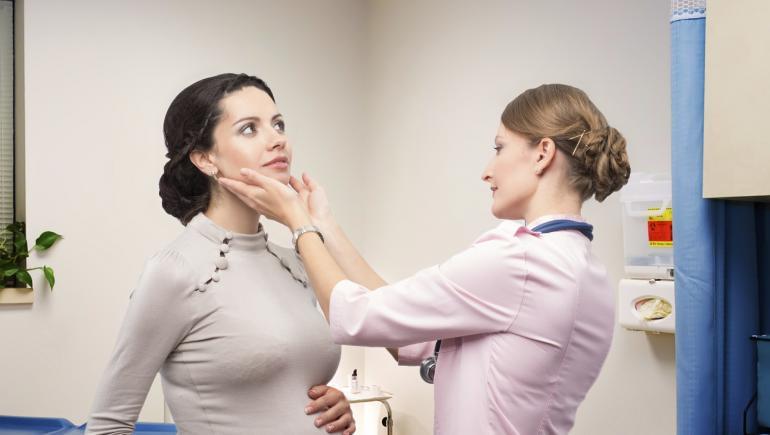
Hashimoto's disease, also referred to as chronic lymphocytic thyroiditis, belongs to the group of autoimmune disorders. It is characterised by an abnormal functioning of the immune system, which produces antibodies against its own body, in this case against its own thyroid cells. The thyroid gland is part of the endocrine system, producing substances that regulate most processes in the human body. Thyroid dysfunction can cause a range of bothersome systemic symptoms, including reduced fertility in women.
Table of contents
How does the thyroid gland affect fertility?
Hashimoto's and hypothyroidism
Hashimoto's and getting pregnant - why treat?
How does the thyroid gland affect fertility?
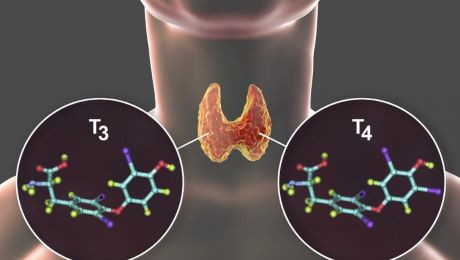
The thyroid gland is a small gland located in the neck. Its job, as a key part of the endocrine system, is to control the body's metabolism. Thyroid hormones regulate how the body uses energy, so they affect almost every organ, including the heartbeat. If there are not enough thyroid hormones, many bodily functions are impaired. The thyroid receives information from the pituitary gland via thyroid stimulating hormone (TSH) and releases triiodothyronine (T3), thyroxine (T4) and calcitonin. The hormonal balance resulting from the normal function of the thyroid gland also plays an important role during conception and subsequently during pregnancy, because:
-
Thyroid hormones have an overriding influence on the proper course of the menstrual cycle;
-
Hormone disturbances can lead to a significant decrease in libido;
-
Hormones produced by the thyroid gland affect metabolic processes, cell growth and development and regenerative processes within all cells of the body - including the foetus and its nervous system.
In women, thyroid hormones interact with the female sex hormones oestrogen and progesterone to maintain normal ovarian function and oocyte maturation. Too much (hyperthyroidism) or too little (hypothyroidism) of thyroid hormones causes problems with getting pregnant or carrying a pregnancy to term, miscarriages, premature births. Thyroid disorders can also adversely affect the development of the foetus. Disorders can also cause anovulation and irregularities in menstrual cycles.
Hashimoto's and hypothyroidism
In hypothyroidism, the thyroid gland does not produce enough hormones. Low levels of thyroid hormones can interfere with the release of an egg from the ovary (ovulation), which affects fertility. In addition, some of the causes of hypothyroidism, such as certain autoimmune disorders or pituitary disorders, can affect fertility. Some common symptoms of hypothyroidism include weight gain, fatigue, constipation, feeling cold, thinning hair, mood swings, pale skin and increased or heavier menstrual bleeding.
Many people with Hashimoto's disease develop hypothyroidism. Hashimoto's is an autoimmune disorder that can cause a decline in thyroid function. With this disease, the immune system attacks the thyroid gland, which becomes damaged and cannot produce enough hormones. Hashimoto's disease makes it difficult to get pregnant and negatively affects the development of the foetus.
Hashimoto's silent enemy
Hashimoto's disease develops slowly, usually over a period of years, leading to chronic damage to the thyroid gland and a decrease in the concentration of thyroid hormones in the blood. It can progress with the formation of thyroid goiter, formed by abnormal remodelling of the organ, which eventually leads to complete failure of this endocrine gland. This is not a permanent symptom and in some patients the symptom does not occur.
The complaints accompanying Hashimoto's disease are mainly due to hypothyroidism and include: constipation, a feeling of fatigue, muscle pain, a feeling of stiffness in the hip and shoulder area, weight gain, joint pain and stiffness, swelling of the knee joints and the small joints of the feet and hands, limb muscle weakness and unusually heavy and prolonged periods. Low levels of thyroid hormones also affect the patient's appearance - his or her skin turns pale, is dry and the face becomes swollen. In the course of chronic lymphocytic thyroiditis, depression, reduced cognitive abilities and increased sensitivity to cold temperatures may also occur.
Hashimoto's and pregnancy
If a woman is pregnant, Hashimoto's is also dangerous for the developing foetus. Babies born to women with untreated hypothyroidism caused by Hashimoto's disease may have a higher risk of birth defects than babies born to healthy mothers. These children are more likely to have intellectual and developmental problems. There is also a link between pregnancy with hypothyroidism and heart, brain and kidney problems in children. If you are planning to become pregnant or are in an early pregnancy, remember to check your thyroid hormone levels.
Hashimoto's and getting pregnant - why treat?
Underestimating the symptoms indicative of Hashimoto's disease is a serious mistake, as without appropriate treatment, the condition can lead to a number of complications, such as cardiovascular disease (including heart failure) and mental health disorders.
It is also a mistake not to treat the disease during pregnancy. As Jarosław Kaczyński, a specialist gynaecologist-obstetrician, endocrinologist from our clinic in Warsaw admits, "The disease is a challenge for the doctor managing a pregnant woman with autoimmune thyroid disease. Hormonal disorders can adversely affect the child developing in the womb. It has long been known that the risk of birth defects in the foetus is higher when a pregnant woman with hypothyroidism is not under the care of a doctor. Studies have shown a link between the lack of treatment of Hashimoto's disease in the pregnant woman and growth abnormalities in the developing foetus and stunted intellectual development of the child. Therefore, I strongly advise testing thyroid hormone levels before or at an early stage of pregnancy."
Women diagnosed with Hashimoto's disease may have difficulty getting pregnant. A group of Japanese researchers have shown that there is a direct link between the presence of antibodies found in Hashimoto's disease and a decrease in the AMH values (a parameter that determines a woman's ovarian reserve). For this reason, it is advisable to treat any disorders affecting the thyroid gland even before conception. With the right therapy, the chances of a trouble-free pregnancy and the birth of a healthy baby are significantly increased.
The medical information presented should be considered as general guidelines and does not replace the individual judgement of the doctor regarding the medical management of each patient. The doctor, after a thorough examination of the patient's condition, determines the extent and frequency of diagnostic tests and/or therapeutic procedures, taking into account specific medical indications. All medical decisions are made in full consultation with the patient.
Author of the article

Invimed editorial team - we serve patients by solving their fertility problems. We use world medical knowledge, state-of-the-art technology and treatment methods. We are here to make dreams of parenthood come true. The smiles on the faces of happy parents give meaning to our work.
See all articles →