In vitro fertilisation (IVF)
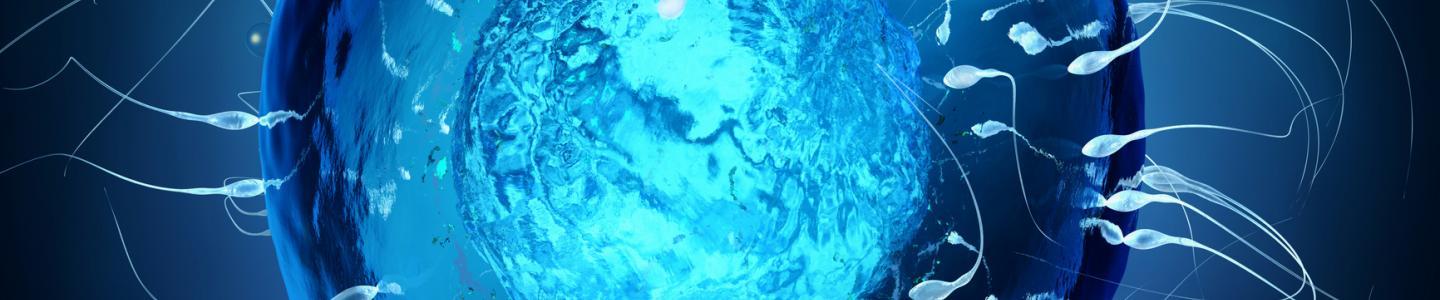
Thanks to IVF, more than 8,000,000 babies have been born, and thanks to Invimed, more than 13,000 have already been born!
The problem of infertility is more common than you think and now affects up to 15-20% couples of reproductive age, according to statistics. For many of them, the only chance for a child is in vitro fertilisation. In forty-two years, more than eight million children have been born thanks to IVF, and the number of couples who have fulfilled their dream of expanding their family continues to grow. You can make it happen too. Thanks to Invimed, around 1,000 babies are born every year.
What is in vitro fertilisation
In vitro
In vitro - definition
Fertilisation in vitro is a medical procedure involving the fertilisation of an egg by a sperm outside the female reproductive system, under laboratory conditions.
Scientific term in vitro, meaning 'in glass', applies to any biological procedure carried out outside the organism in which it would normally take place.
IVF is an abbreviation for the English-language term in vitro fertilization i.e. fertilisation in vitro.
Source: In vitro fertilization (3rd edition) Elder and Dale, Cambridge University Press, 2011
***
According to Polish law, from fertilisation in vitro heterosexual couples, whether married or not, can benefit. The most important piece of legislation regulating IVF is the Act of 25 June 2015 on infertility treatment.
What purpose does in vitro serve?
In vitro fertilisation is a complex series of procedures used to help a couple conceive a child - it is therefore a method of treating infertility.
Fertilisation in vitro offers the chance to have offspring when other treatments have proved ineffective or, according to the current state of knowledge, have no chance of success.
IVF can be used in women as well as men in cases of reduced sperm quality and in couples with infertility of unexplained origin (idiopathic infertility).
IVF can be performed using the partner's own ova and sperm or ova, sperm or embryos from anonymous donors.
What does the in vitro procedure involve?
Typically, the IVF procedure involves five steps.
- Stimulation of surplus oocyte production and cycle monitoring until oocyte retrieval time (OPU) is determined.
- In a laboratory setting, mature ova collected from the ovaries are fertilised using one of the procedures: classic IVF, ICSI, IMSI or PICSI.
- Embryo culture. Once fertilisation has been confirmed, the embryologist regularly assesses the development of the embryos throughout the culture period (up to six days after fertilisation) in order to select the most promising ones.
- Embryo transfer 3 or 5/6 days after oocyte fertilisation. Unused normal surplus embryos are frozen (vitrified) and stored at low temperatures.
- If a woman does not get pregnant and has vitrified embryos, they can be transferred in subsequent approaches. If the woman does become pregnant, the unused embryos can be stored for the future or transferred for adoption.
Importance and effectiveness of in vitro
In vitro fertilisation is the definitive and most effective method used to treat infertility. At Invimed clinics, 54% of all IVF cycles carried out between 2015 and 2017 resulted in the birth of children. Read more: Effectiveness of in vitro treatments.
The first birth of a baby after IVF treatment took place in 1978 in the UK. It was a girl, Luise Brown. Since then, IVF has been used successfully and more than 8 million babies have been born worldwide thanks to this method. In 2006, Louise Brown gave birth to a son, Cameron, who was conceived naturally.
In vitro with Nobel Prize
In 2010, physiologist Robert G. Edwards was awarded the most prestigious honour in the scientific world, the Nobel Prize in Physiology or Medicine, for developing the method of in vitro fertilisation.
It was Edwards who developed the method that resulted in the birth of the first baby after IVF treatment on 25 July 1978.
Developing a method of creating a human embryo extracorporeally and then transferring it into a woman's uterus so that it could develop was a joint success for Edwards and collaborating doctor Patrick Steptoe.
Their work together has made it possible to treat infertility, a condition that affects a large proportion of humanity, including more than 10% couples worldwide.
Source: Press release "The Nobel Prize in Physiology or Medicine 2010", nobelprize.org, 2010
In vitro ICSI
A milestone for IVF was the birth in 1992 (Palermo et al.) of the first child conceived through the technique of intra-cytoplasmic sperm injection into the egg (ICSI).
An ICSI procedure is recommended in the case of:
- very low sperm count in semen (crypto-oligozoospermia),
- severe asthenozoospermia (abnormal movement parameters),
- low percentage of spermatozoa with a normal morphological structure.
Derivatives of the ICSI method, used depending on the greater number of abnormalities found in the sperm, are: PICSI, IMSI and Hb-IMSI.
Source: In vitro fertilization (3rd edition) Elder and Dale, Cambridge University Press, 2011
Why use IVF at Invimed clinics?
Highly effective
Assistance from the coordinator
Each pair we provide the care of a Medical Care Coordinatorwho supports the patient and her partner throughout the treatment period.
General practitioner
We make sure that each couple has their own attending doctor who does not change throughout the treatment process.
Quality and standards
The quality of services and procedures is overseen by the clinic's team of experienced staff, known as the 'team of the clinic'. Quality Team.
Indications for in vitro?
In vitro fertilisation is recommended for couples diagnosed with:
-
Obstruction of the fallopian tubes, inability to induce ovulation or endometriosis in a woman;
-
poor semen quality in the male;
-
idiopathic infertility in both (despite good test results, they fail to conceive a child);
-
infertility when previous treatments have failed.
Success factors for IVF treatment
What factors matter most in terms of the success of IVF treatment? What are our chances of IVF success? The answer may be different for every couple. Therefore, it is extremely important to undertake diagnostics and treatment in a reputable infertility treatment centre which guarantees objective results. Invimed, which has been in existence for almost 20 years, is such a centre.
At Invimed, each couple has their own treatment programme, created and, if necessary, modified by the attending doctor, who specialises in infertility treatment. Equally important are a modern embryology laboratory, access to various in vitro fertilisation methods, assistive techniques and an experienced team of embryologists. Thanks to these factors, the effectiveness of IVF at Invimed is very high.
Successful fertilisation (including in vitro fertilisation) is also influenced by:
- Female age and ovarian reserve. As a woman ages, the number and quality of her ova decrease, which has a direct impact on fertility. It is worth taking an AMH test prophylactically in order to react as early as possible to the risk of fertility loss.
- Semen parameters play an equally important role and can be checked by performing an extended semen test. The lower the number of motile and structurally normal sperm in the semen, the lower the chances of fertilisation.
- Conditions causing infertility, such as endometriosis in women or varicocele in men. Depending on the disease in question and its severity, the chances of conception decrease.
- Associated diseases of infertility such as diabetes, autoimmune diseases and infectious diseases reduce the chances of achieving a pregnancy.
- Genetic factors - in the IVF procedure can be verified on the basis of genetic testing of the couple, but also preimplantation embryo testing.
- BMI - Overweight and obesity reduce the chance of getting pregnant. A BMI over 30 significantly reduces fertility. The same is true for being underweight. A correct BMI should remain between 18.5 and 24.99.
- Smoking - The toxic substances contained in tobacco smoke reduce the chances of getting pregnant by up to half compared to non-smoking women. Smoking also reduces the quality of semen (affects the structure and motility of sperm).
- Structure of the reproductive organs - The absence or obstruction of one fallopian tube in a woman or the absence of one testicle in a man can make it very difficult to conceive a child. The chances of getting pregnant are much higher when the couple does not have anatomical defects.
- Duration of infertility and history of treatmentif this has already taken place.
- Mental state of patients. Infertility can result from mental blockages, especially severe stress and also depression. A poor mental state is also not conducive to implantation of the embryo and maintenance of the pregnancy.
- Diet and lifestyle. What we eat and how we spend our time affects the quality of reproductive cells and, in the case of a woman, also the success of embryo implantation and the course of pregnancy.
Price list for the procedure: In Vitro
| Gdynia More information | |
| Katowice More information | |
| Poznan More information | |
| Wrocław More information | |
| Warsaw Mokotow More information | |
| Warsaw Prague More information |



You may also be interested in







The medical information presented should be considered as general guidelines and does not replace the individual judgement of the doctor regarding the medical management of each patient. The doctor, after a thorough examination of the patient's condition, determines the extent and frequency of diagnostic tests and/or therapeutic procedures, taking into account specific medical indications. All medical decisions are made in full consultation with the patient.
Author of the article

Invimed editorial team - we serve patients by solving their fertility problems. We use world medical knowledge, state-of-the-art technology and treatment methods. We are here to make dreams of parenthood come true. The smiles on the faces of happy parents give meaning to our work.
See all articles →